MARLPIT PRESSIndependent Publisher
Physician and cosmopolitan
Axel Martin Fredrik Munthe was born in Sweden in 1857 and trained as a physician in France. His career moved easily between worlds that rarely occupy the same biography: fashionable medical practice in Paris and Rome, work among the poor, epidemic and disaster relief, royal medicine, travel, collecting, and the construction of a famous house on Capri.
He volunteered during the 1884 cholera epidemic in Naples and later took part in relief work after the 1908 Messina earthquake. He became physician and confidant to Victoria of Baden, Crown Princess and later Queen of Sweden, a relationship that extended across decades.
Capri and San Michele
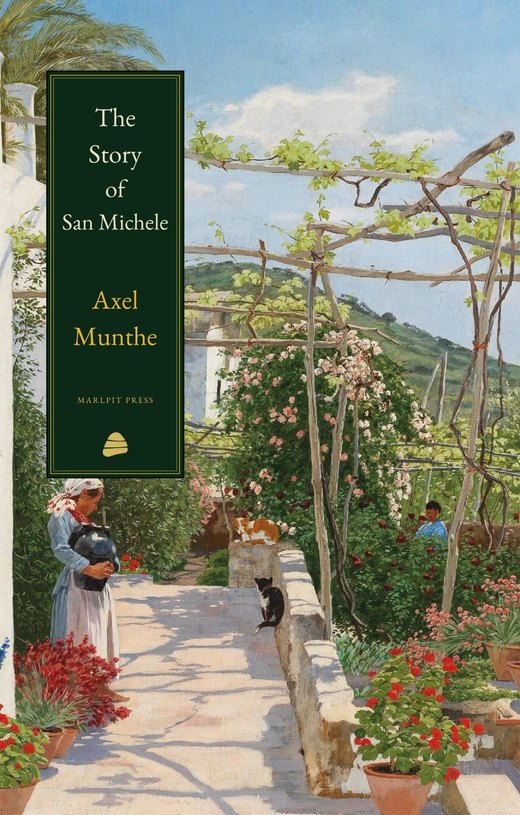
Munthe’s most enduring physical creation was Villa San Michele at Anacapri. He built it around a ruined chapel and Roman remains, shaping the site into a personal combination of house, garden, collection, viewpoint, sanctuary, and legend. The villa became the organizing symbol of the book he had been imagining in one form or another since the late nineteenth century.
Animals were equally central to his identity. Munthe opposed cruelty, cared intensely about birds and dogs, and tied the financial purpose of his book to animal protection in Naples.
The elusive autobiographer
The documented life is extraordinary, but Munthe was also a master of self-mythology. Modern archival biography has shown that The Story of San Michele rearranges chronology, omits marriages and children, reshapes relationships, and converts memory into polished literary scenes.
Serious eye disease, insomnia, and isolation shaped his later years and the final form of the book. He died in 1949. His legacy now belongs both to medicine and animal advocacy and to the peculiar autobiographical art through which he made San Michele famous around the world.