The life and the legend
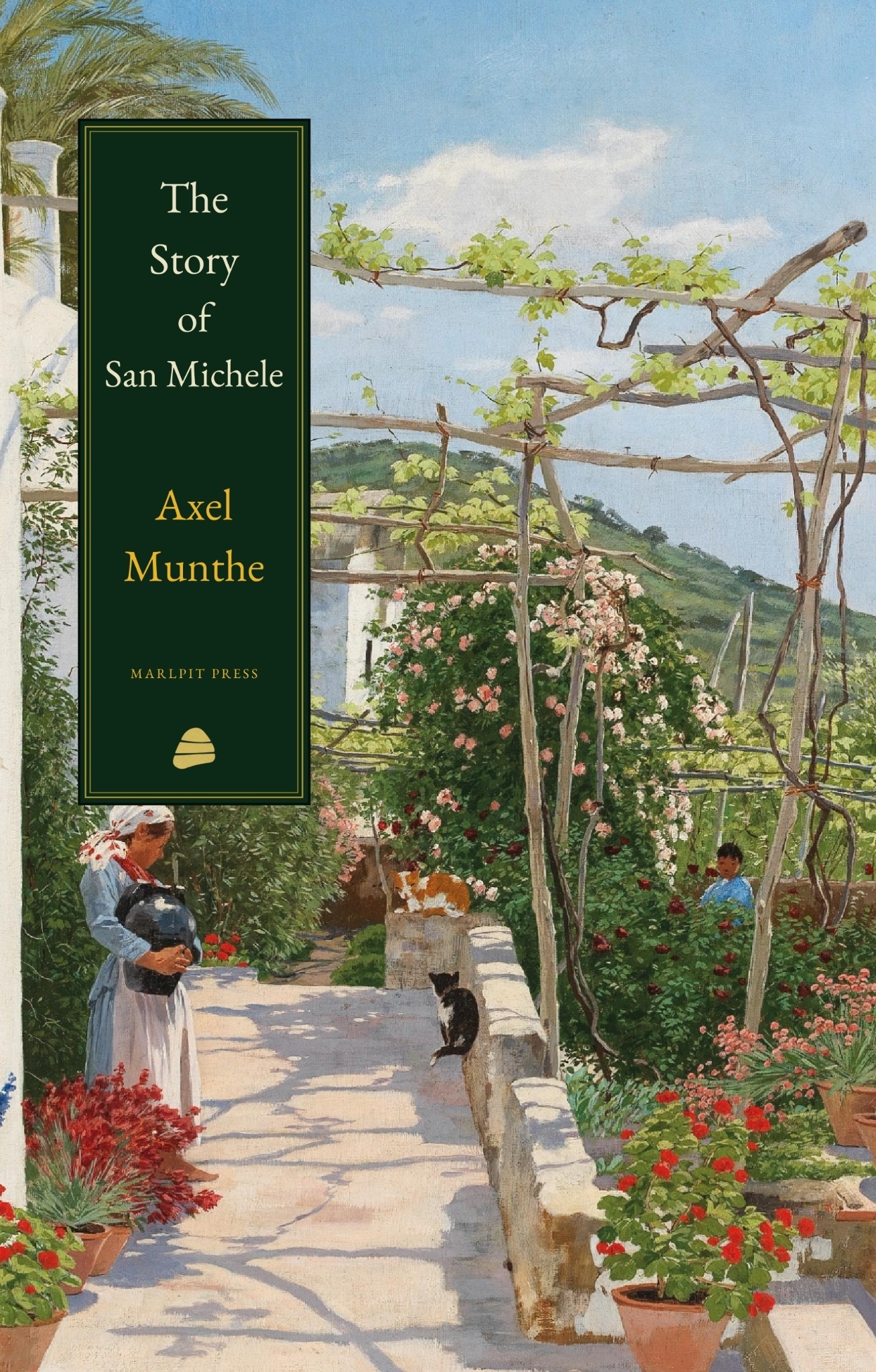
High above the Bay of Naples on Capri stands Villa San Michele, the house Axel Munthe built among the remains of an ancient Roman villa. As a young man he had seen the ruined chapel of San Michele and imagined that one day the place would be his. Decades later the villa became both the setting and the governing symbol of the book through which millions of readers came to know him.
The Story of San Michele follows a life that really was unusually eventful: medical training in France, practice in Paris and Rome, work during the Naples cholera epidemic, relief after the Messina earthquake, years among aristocratic patients and the poor, a long relationship with Crown Princess and later Queen Victoria of Sweden, a passion for animals, damaged eyesight, insomnia, and the building of San Michele.
Yet the book is not a conventional deposition of facts. Munthe rearranges chronology, suppresses major parts of his private life, displaces anecdotes, combines people, heightens scenes, and moves freely into ghost story, dream, comedy, satire, and fantasy. The archive confirms enough of the extraordinary life to explain why readers trusted him, while also showing how deliberately he fashioned that life into literature.
A book thirty years in the making
The 1928 preface makes the book sound as though it arose from a relatively immediate period of insomnia, poor eyesight, loneliness, and remembrance. The actual genesis stretches much farther back. Munthe mentioned a projected book involving Capri and Tiberius to John Murray in the 1890s, referred in 1899 to a book called San Michele, and left material in notebooks long before the final manuscript.
The recognizable book accumulated over roughly a decade from the late 1910s, with much of the final work done after 1926. It was written originally in English and eventually organized into thirty-two loosely chronological chapters. Munthe himself resisted attempts to classify it simply as autobiography or a doctor’s memoir. Formally, he was right.
Publication, bestseller, controversy
John Murray published the British edition on 17 April 1929. E. P. Dutton issued it in the United States the same year. Murray initially worried that the book’s length and cost made it commercially risky, while Munthe emphasized that proceeds were intended to benefit the Naples Society for the Protection of Animals.
British attention began slowly, then R. B. Cunninghame Graham’s long and enthusiastic Observer review helped turn the book into an event. Six British printings followed before the end of 1929. In America the success became extraordinary: TIME later reported that it led nonfiction sales for eleven months.
Reviewers were already alert to the tension between memoir and invention. The Spectator praised the entertainment while noting how artfully shaped some episodes seemed. A more specific dispute concerned Munthe’s portrayal of the neurologist Jean-Martin Charcot. Modern archival work supports a careful judgment: Charcot sat on Munthe’s doctoral panel and Munthe likely attended his open lectures, but evidence does not establish the intimate pupil-master relationship suggested by the book. Charcot’s son publicly challenged Munthe’s account in 1931.
About this Marlpit Press edition
This Marlpit Press edition presents The Story of San Michele as the literary memoir Munthe actually wrote, without forcing it into the narrower category of factual autobiography. The text is newly typeset for comfortable reading and accompanied by publication and author context that helps separate documented life from deliberate self-mythology.
That distinction does not diminish the book. It makes its achievement clearer. Munthe transformed cholera wards, medical practice, ruins, birds, royal patients, damaged eyes, sleepless nights, death, and Capri into a world with its own moral weather. The book survives because that world is unforgettable.
About Axel Munthe
Axel Martin Fredrik Munthe (1857–1949) was a Swedish physician, writer, relief worker, animal advocate, collector, and builder. He studied medicine in France and established successful practices in Paris and Rome. He volunteered during the 1884 cholera epidemic in Naples and later took part in relief work after the 1908 Messina earthquake.
Munthe became physician and confidant to Victoria of Baden, Crown Princess and later Queen of Sweden, and divided much of his life between Italy and Sweden. His passion for animals and opposition to cruelty became central both to his public identity and to San Michele. Serious eye disease eventually made bright Mediterranean light painful and shaped the circumstances in which his famous book was completed.
The Story of San Michele
Marlpit Press edition · ISBN 979-8193564096
 MARLPIT PRESSIndependent Publisher