Twelve lives, one theory of adventure
Twelve Against the Gods brings together Alexander the Great, Casanova, Christopher Columbus, Muhammad, Lola Montez, Cagliostro and Seraphina, Charles XII of Sweden, Napoleon I, Catiline, Napoleon III, Isadora Duncan, and Woodrow Wilson. The list is deliberately odd. Bolitho was not defining adventure as travel or exploration. He was interested in a temperament.
For Bolitho, the adventurer is someone who breaks from the settled order and risks destruction in pursuit of an intensely personal destiny. Society survives through a struggle between those who guard what already exists and those who search for what does not. The rebel’s greatest danger arrives after victory: success can convert the outsider into another guardian of the order he once challenged.
That idea turns the book into something stranger than a set of biographies. Bolitho moves freely among history, psychology, journalism, aphorism, social theory, and literary portraiture. His subjects become variations on ambition, solitude, appetite, risk, freedom, and the peculiar moment when triumph begins to destroy the person who achieved it.
A publisher’s assignment transformed
One of the most revealing facts about the book is that Bolitho did not simply arrive at Simon & Schuster with the project complete. A later New Yorker profile of the firm reported that M. Lincoln Schuster assigned the project to him. Simon & Schuster was then unusually willing to conceive nonfiction books in-house and match ideas with writers.
Bolitho took that commercial commission and made it intensely his own. The result carried the habits of the interpretive journalism he had developed during the 1920s: events matter because of the relationships among them, and biography becomes a way of explaining forces larger than the individual life.
The book was promoted aggressively. Gilbert Seldes complained about the publicity campaign and the advertising language surrounding “the incomparable Bolitho,” but admired Bolitho’s ability to manipulate ideas and see connections. Other reviewers made a similar distinction. The New Yorker liked the narrative portraits more than the theory imposed on them; TIME found the premise strained yet acknowledged the astonishing energy of the prose.
Success and sudden afterlife
Simon & Schuster published the book in 1929, and it became an immediate success. Surviving copies document a second printing in the same month as the first, and the publisher’s own historical account later called it an instant bestseller.
Bolitho did not live long enough to enjoy the full afterlife of the book. He died at Avignon on 2 June 1930, aged thirty-nine, after appendicitis and peritonitis. A memorial edition followed with a foreword by his friend Walter Lippmann. The sudden death intensified the aura around a writer whose subject had been people who pushed their lives beyond ordinary limits.
About this Marlpit Press edition
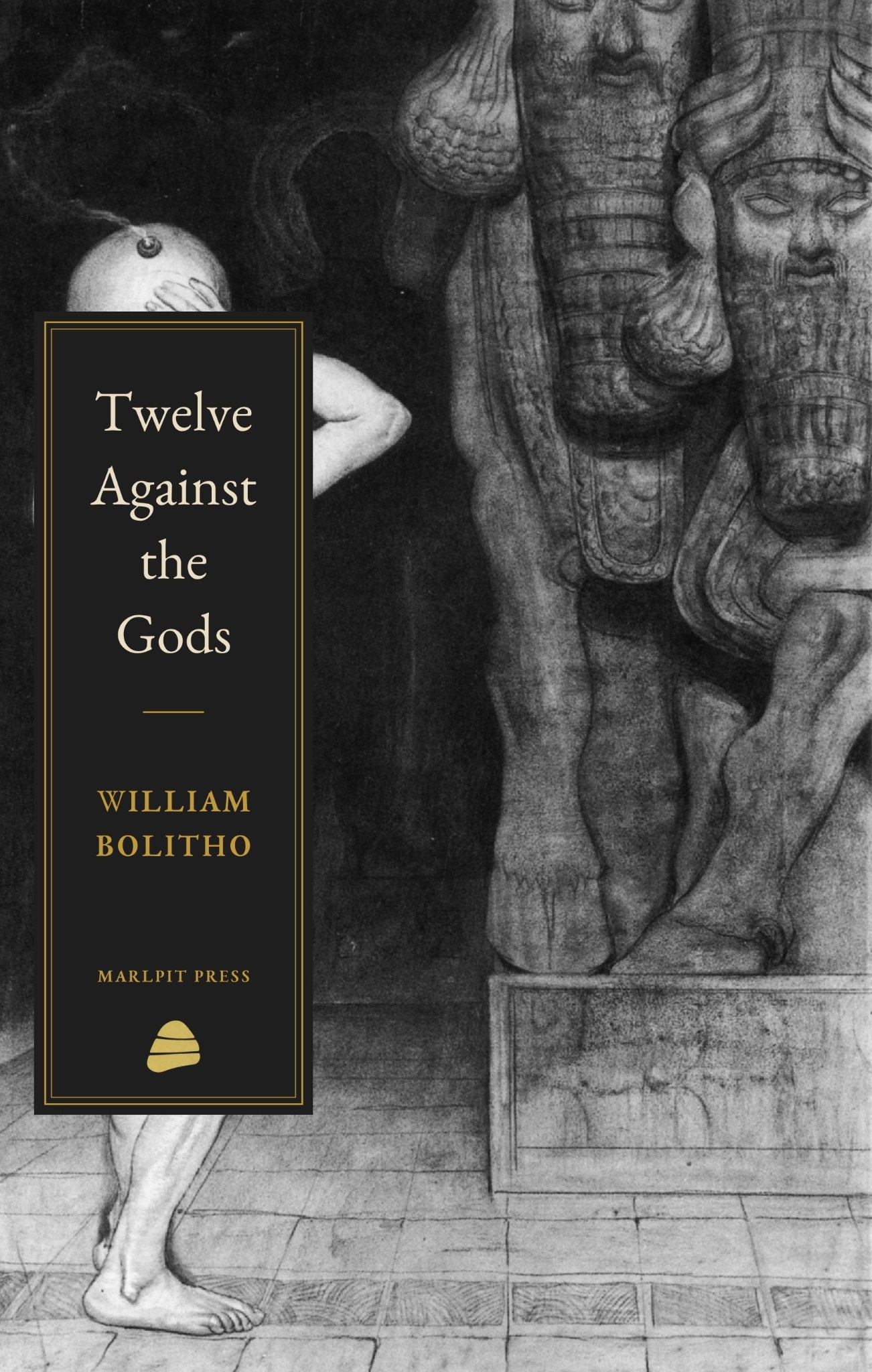
This Marlpit Press edition presents the complete 1929 text in a newly typeset format, preserving the speed, compression, and argumentative oddity that made the book such a sensation.
Rather than treating the twelve chapters as conventional popular biographies, the edition frames them around Bolitho’s real subject: his theory of the adventurer. That context matters because the book’s most surprising choices, especially Isadora Duncan and Woodrow Wilson, only make sense once “adventure” is understood as psychological rebellion rather than physical wandering.
About William Bolitho
William Bolitho was born Charles William Ryall at Droitwich, Worcestershire, probably in January 1891, and grew up largely in South Africa. He trained for religious life and, according to family accounts, became an Anglican deacon before the First World War. The war broke that trajectory. He served as a British Army officer and suffered severe wounds on the Somme.
After the war he remade himself as a journalist, foreign correspondent, essayist, biographer, columnist, and playwright. He reported on postwar Europe and became known for an interpretive style concerned with motives, systems, and the relationships behind events. His circle included figures such as Walter Lippmann, Ernest Hemingway, Walter Duranty, and Noël Coward. The compressed intensity of that career culminated in Twelve Against the Gods only months before his death.
Twelve Against the Gods
Marlpit Press edition · ISBN 979-8193700203
 MARLPIT PRESSIndependent Publisher