 MARLPIT PRESSIndependent Publisher
The White Crow in 1928: Philip MacDonald Between Puzzle and Thriller
The White Crow is obscure now. In 1928 it was a prominent new mystery by a rising writer, praised in major periodicals, reprinted for decades, and later selected for a classics series.
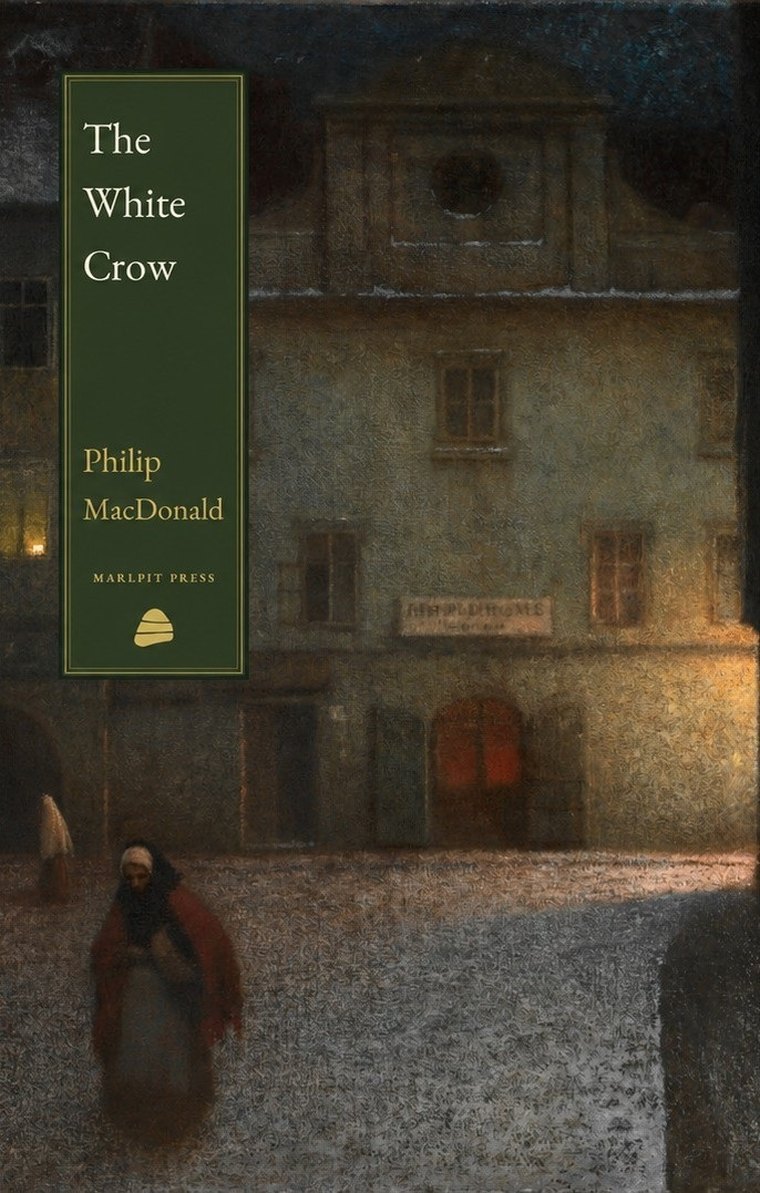
The second Anthony Gethryn novel
William Collins, Sons & Co. published The White Crow in Britain in 1928, four years after The Rasp introduced Colonel Anthony Gethryn. The Dial Press issued the American edition in the same year.
The book begins with a locked-office murder of financier Sir Albert Lines-Bower and the expectation of fair-play detection. It does not stay there. Kidnapping, torture, criminal conspiracy, political pressure, pursuit, and a violent climax pull the book toward thriller territory. The hybrid is central to Philip MacDonald’s development.
How reviewers saw it
The contemporary reception that can be verified is notably favorable. The New Yorker recommended the book. The Times Literary Supplement praised its unusual story and thought MacDonald kept even the more violent material within the bounds of probability. The Nation and Athenaeum considered it better written and more exciting than most detective fiction.
It also appeared in The Spectator’s report of books most in demand at the Times Book Club. That does not provide a sales total, but it confirms that the novel was circulating as a current success rather than as a marginal experiment.
A forty-year publishing afterlife
The book remained commercially viable much longer than its present obscurity suggests. Collins issued inexpensive hardcover reprints in the 1930s. Fontana brought it back as a paperback in 1958. In 1966 crime novelist Michael Gilbert selected it for Hodder & Stoughton’s Classics of Detection and Adventure.
That last title is revealing. “Detection and Adventure” describes the mixture MacDonald had been pursuing since the 1920s. His mysteries often oscillate between the civilized clue puzzle and a darker, faster melodramatic form.
Why modern readers need a warning
The novel’s biggest difficulty is not a stray dated expression. Racial assumptions enter the mechanism of the solution itself. A Black character with albinism, an interracial sexual relationship treated through degrading assumptions, and a supposed racial smell all become part of the plot’s logic.
A modern publisher cannot make that disappear without rewriting the novel. The responsible approach is to preserve the historical text and tell readers clearly that the material is there. Formal ingenuity and historical prejudice can coexist in the same work, and understanding the book requires acknowledging both.
Why it nearly vanished
No single cause can fully explain the decline. MacDonald had other books that remained easier to celebrate, including The Rasp, Murder Gone Mad, Warrant for X, and The List of Adrian Messenger. The racial mechanism of The White Crow also became increasingly difficult to repackage without comment.
What remains historically striking is the distance between its old reputation and its current one. A book once praised, demanded, reprinted, and selected as a classic became nearly invisible. That is exactly the kind of publishing afterlife worth reconstructing.
Research basis
This note draws on primary and scholarly material assembled for the Marlpit Press edition and research dossier.
- The New Yorker, 1928
- Times Literary Supplement, 1928
- The Nation and Athenaeum, 1928
- The Spectator Times Book Club demand list
- Thomas Leitch and later Philip MacDonald criticism