 MARLPIT PRESSIndependent Publisher
Where Xiyou bu Fits Into Journey to the West
Xiyou bu is often called a sequel to Journey to the West, but that description is misleading. The sixteen chapters are designed to be inserted inside the original pilgrimage at one precise point.
The exact insertion point
The book’s own explanatory material tells readers where to put it. Sun Wukong has just secured Princess Iron Fan’s palm-leaf fan and extinguished the flames of the Mountain of Fire. Before the pilgrims proceed to the episode conventionally numbered chapter 62, the supplement opens a sixteen-chapter detour.
That means almost no objective progress in the pilgrimage is required. The travelers have not finished the journey and begun another. Wukong is held inside an interruption, and the interruption expands until it contains alternative histories, future worlds, mirror realms, theatrical episodes, bureaucratic judgments, and transformations of identity.
Why the Mountain of Fire matters
The placement creates the book’s central joke and spiritual problem. Wukong has just conquered fire outside himself. The supplement asks whether he has conquered the “fire” within the mind. Its own question-and-answer says that a demon remains unvanquished: the Demon of Desire.
That demon appears through the Qing Fish, 鯖魚, whose name is made to echo 情, qing: feeling, emotion, passion, attachment, desire. Wukong can defeat ordinary monsters by force. He cannot simply beat to death a delusion sustained by his own mind.
What happens inside the dream
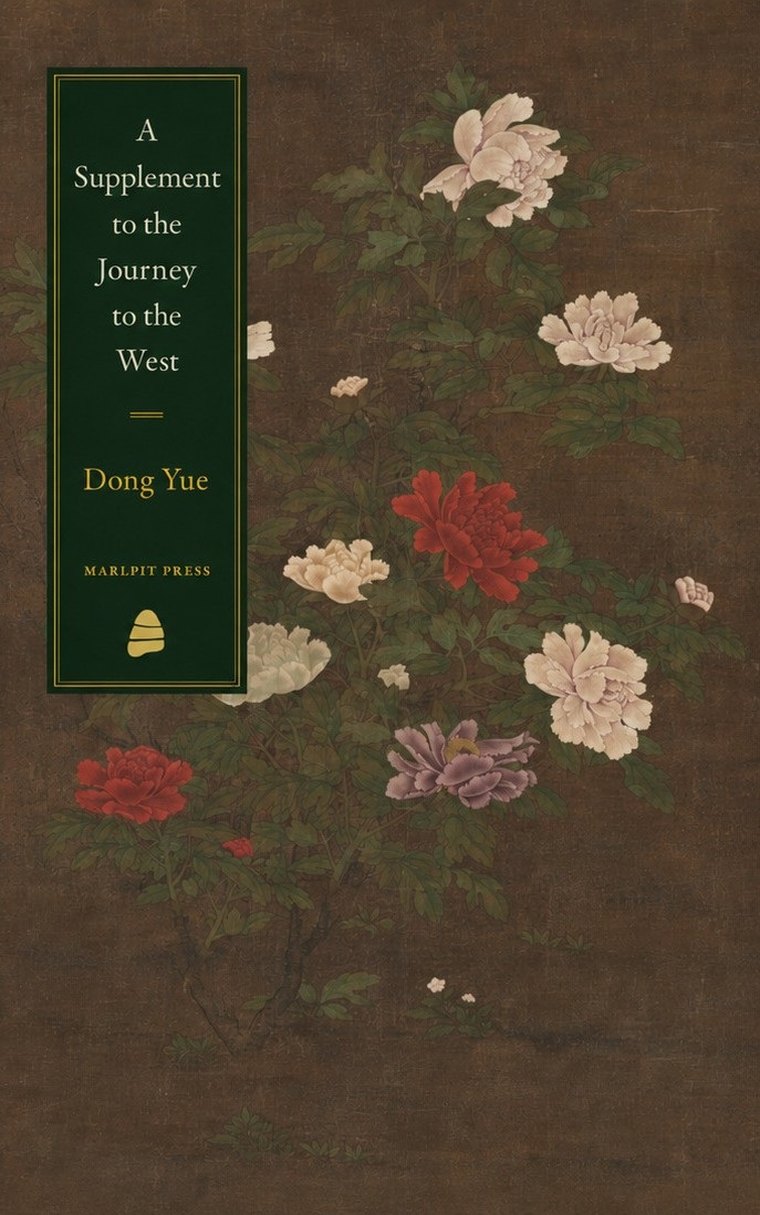
The sequence begins in a brilliant spring landscape of peonies. Wukong becomes separated from his companions while seeking food and slips into a reality that grows steadily less stable. He encounters a “New Tang,” hears of people boring into Heaven, and searches for fantastic objects.
At the Gallery or Tower of Myriad Mirrors, different mirrors open into different worlds and times. Wukong moves into historical scenes involving Xiang Yu, takes on different identities, becomes Fair Lady Yu, reaches the future, and assumes the position of King Yama. As judge of the dead he tries the notorious Qin Hui and imagines retrospective justice for Yue Fei.
Stories generate other stories. Performances create new realities. Every apparent explanation can become another trap. By the end, the Qing Fish is exposed, but the decisive discovery is that the demon was never wholly external to Wukong.
A continuation that changes the kind of story
Journey to the West already moves easily among religious allegory, comedy, adventure, satire, and transformation. Xiyou bu takes that flexibility and turns it inward. The pilgrimage pauses while consciousness becomes the landscape.
That is why modern readers have compared the book to psychological fiction, dream narrative, metafiction, and even much later experimental literature. The comparison should not erase its seventeenth-century Buddhist and late Ming contexts. Its radical form grows directly from the spiritual question posed by qing and delusion.
The title and the author
The Chinese title 《西遊補》 means roughly “Supplement to the Western Journey.” English versions have appeared under titles including The Tower of Myriad Mirrors and Further Adventures on the Journey to the West. The author traditionally known as Dong Yue is increasingly called Dong Tuo in specialist scholarship, and the role of his father Dong Sizhang in the work’s textual history remains disputed.
Those uncertainties make the 1641 paratexts unusually important. The preface, Q&A, illustrations, and commentary are part of the surviving evidence for how the book first presented itself. The Marlpit Press translation includes the preface and “Answers to Questions” so readers can see the work explaining its own place in the pilgrimage.
Research basis
This note draws on primary and scholarly material assembled for the Marlpit Press edition and research dossier.
- 1641 Xiyou bu edition and paratexts
- Shuen-fu Lin and Larry J. Schulz translation
- Qiancheng Li and Robert E. Hegel translation and scholarship
- Qiancheng Li, Xie Wenhua, Zhao Hongjuan, Xiaoqiao Ling, Thomas Kelly
Continue reading
A Supplement to the Journey to the West edition · Dong Yue biography