A sequel that refuses to behave like a sequel
A Supplement to the Journey to the West (《西遊補》, Xiyou bu) is only sixteen chapters long, yet it opens one of the strangest detours in seventeenth-century Chinese fiction. First printed in 1641, it inserts itself into the middle of Journey to the West after Sun Wukong has extinguished the flames of the Mountain of Fire and before the pilgrims continue toward the episode conventionally numbered chapter 62.
The placement is the key. Wukong has defeated literal fire, but the supplement asks whether the fire of the mind has been extinguished. Separated from his companions amid flowering peonies, he falls into a world generated by attachment and desire. Time, history, identity, and space begin to lose their ordinary rules. He passes through a “New Tang,” encounters people boring into Heaven, enters a tower or gallery of myriad mirrors, crosses into past and future worlds, changes identity and sex, becomes King Yama, judges the notorious Qin Hui, and repeatedly mistakes another layer of illusion for escape.
The monster behind the dream is the Qing Fish, whose name resonates with qing 情: feeling, passion, attachment, desire. Wukong’s remaining enemy cannot be treated like an ordinary demon because it is inseparable from the mind doing the fighting. The book turns monster fighting into introspection.
Dream, history, and late Ming experiment
Modern scholarship has read Xiyou bu as Buddhist allegory, dream literature, political satire, psychological fiction, metafiction, and an unusually sophisticated meditation on qing. Those approaches differ, but they agree on the extraordinary formal energy of the work. Mirrors open onto incompatible worlds. Historical figures and theatrical performances invade the pilgrimage. Spectators become participants. Past and future interpenetrate. Apparent exits generate deeper enclosures.
The first edition was itself a complex object. Its surviving apparatus includes a preface, an authorial question-and-answer, illustrations, contents, running commentary, and the text. China in 1641 did not possess a newspaper reviewing culture comparable to nineteenth-century Europe, so there is no honest set of “contemporary reviews” to quote. The earliest reception has to be reconstructed from the book’s own paratexts and later records. Nineteenth-century readers revived the work, and Lu Xun later singled out its strangeness, illusion, comedy, and invention as exceptional among fiction of its period.
Who wrote Xiyou bu?
English-language readers usually know the traditionally credited author as Dong Yue. Recent specialist scholarship increasingly argues that 說 in his name was pronounced Tuo, so “Dong Tuo” is becoming common in academic writing. The familiar form “Dong Yue” remains useful for continuity and discovery, and this edition retains it in the main author credit while acknowledging the newer pronunciation.
Authorship itself is more complicated. A significant body of scholarship has proposed that Dong Tuo’s father, Dong Sizhang, composed an earlier work, perhaps connected with a lost Dream Calendar, and that the son revised, completed, or published it. Other scholars defend Dong Tuo’s sole authorship. The evidence does not support pretending the controversy is settled.
The uncertainty is unusually appropriate to a book obsessed with reflections without stable originals, changing identities, nested texts, and worlds generated from other worlds. What can be said securely is that the surviving 1641 book stands at the intersection of the literary lives of father and son and appeared under the studio identity associated with Silent Whistle Studio.
About this Marlpit Press edition
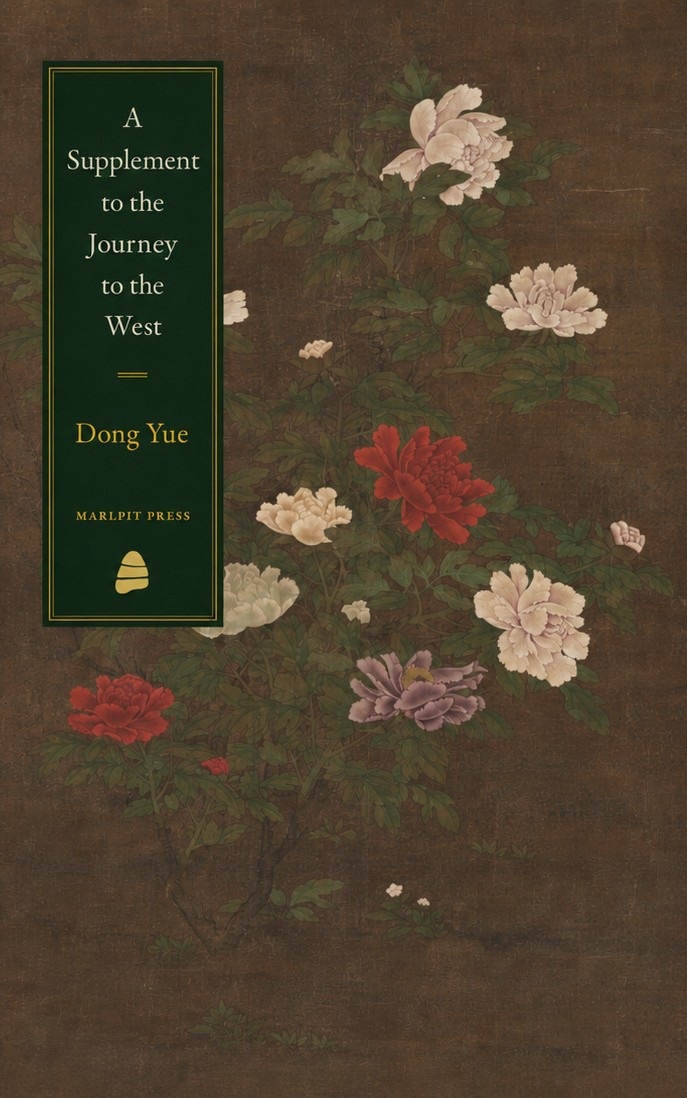
This Marlpit Press edition offers a new complete English translation of the sixteen-chapter work, with the 1641 preface and “Answers to Questions” included so that readers can encounter the book’s own explanation of its place in Journey to the West and its treatment of desire.
The translation keeps familiar narrative names such as Tripitaka, Monkey, Pigsy, and Sandy where they serve the storytelling, while retaining religious and formal names where the context requires them. Notes and introductory material explain historical figures, Buddhist language, puns, textual puzzles, and features of the original paratext without turning the novel into a wall of annotation.
The purpose is to let the book remain what it is: comic, bewildering, philosophical, theatrical, and deliberately unstable. Its deepest movement is simple. Wukong cannot free himself from delusion until he recognizes his own part in creating it.
About Dong Yue
Dong Tuo (1620–1686), conventionally known in English as Dong Yue, was a writer, scholar, Buddhist recluse, Ming loyalist, and compulsive maker and destroyer of books. He wrote on dreams, history, religion, antiquarian subjects, and literature, and later became famous for repeatedly burning large portions of his own writings.
His biography is inseparable from the collapse of the Ming dynasty and the literary culture of Jiangnan in which Xiyou bu appeared. The continuing authorship debate also brings his father Dong Sizhang, a dream-writing scholar who died in 1628, into the story. Whatever final judgment future scholarship reaches, the book belongs to that remarkable father-son intellectual world.
A Supplement to the Journey to the West
Marlpit Press edition · ISBN 979-8193529873
 MARLPIT PRESSIndependent Publisher