MARLPIT PRESSIndependent Publisher
War and the problem of attrition
Basil Henry Hart was born in Paris on 31 October 1895 and began using “Liddell Hart” as his surname in 1921. Educated at St Paul’s School and Corpus Christi College, Cambridge, he entered the British Army after the outbreak of the First World War.
His Western Front service was relatively brief but decisive. He served in the Ypres sector and on the Somme. On 18 July 1916, near Mametz Wood, he was severely gassed and removed from front-line duty. The intellectual meaning he later attached to those experiences developed over time, but the war became central to his search for methods that might avoid costly frontal attrition.
Writer and strategist
After the war Liddell Hart became a prolific military writer, journalist, critic, and historian. He studied campaigns across many periods and developed the theory for which he became famous: the “indirect approach,” the attempt to dislocate an opponent physically and psychologically rather than attack strength head-on.
His historical writing was never detached from contemporary strategic argument. Commanders such as Scipio, Sherman, and others became case studies through which he tested and illustrated ideas about movement, surprise, communications, morale, and the economic foundations of war.
Influence and controversy
Liddell Hart became one of the twentieth century’s most influential writers on strategy, but his reputation has also been the subject of substantial criticism. Historians have debated his claims about influence on interwar armored warfare, his retrospective shaping of the historical record, and the degree to which his favored commanders were made to confirm his own theories.
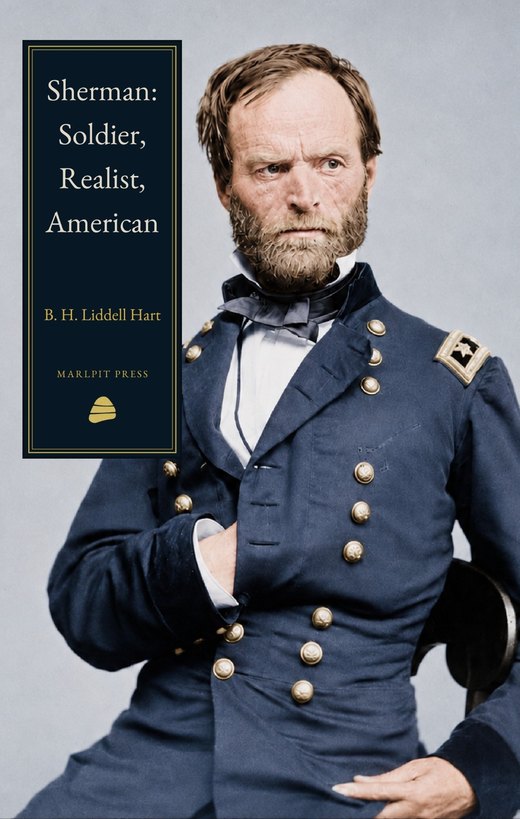
That makes Sherman especially valuable. Published in 1929, it shows Liddell Hart’s strategic vocabulary taking shape in real time. He was knighted in 1966 and died in 1970.