 MARLPIT PRESSIndependent Publisher
How Liddell Hart Turned Sherman Into a Strategic Argument
B. H. Liddell Hart’s Sherman is easiest to understand when read as two books at once: a biography of a Civil War general and a 1929 argument about the future of war.
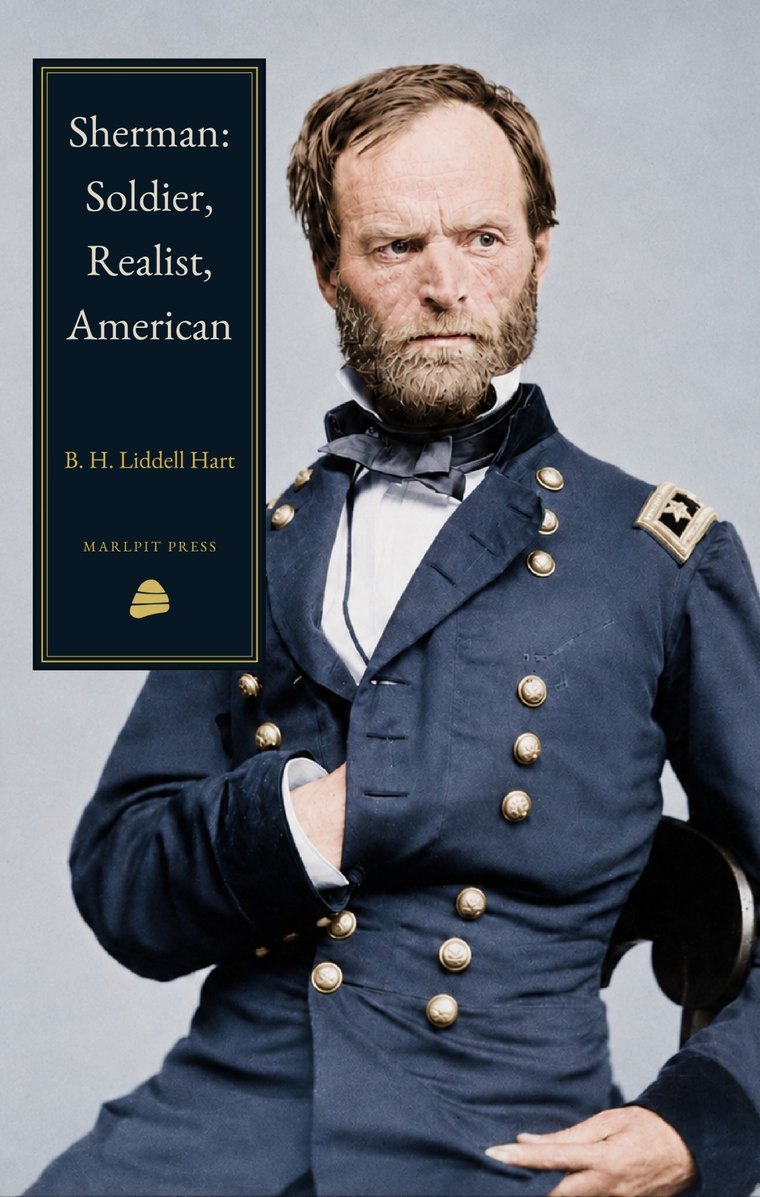
Why Sherman, not Lee?
Hart was invited in 1928 to write a book about the American Civil War. Robert E. Lee would have been an obvious subject for a British military writer and arguably the easier commercial choice. Hart chose Sherman.
The western campaigns gave him something Lee’s war did not: a story of deep movement, railway and communications warfare, economic disruption, psychological pressure, maneuver against infrastructure, and operations that could bypass rather than merely smash enemy strength. These were precisely the problems Hart had been thinking about since the First World War.
The three purposes in Hart’s preface
Hart was unusually explicit about his design. He wanted to portray the workings of Sherman’s mind, project Sherman onto contemporary history in order to draw lessons for modern war, and use the general to illuminate aspects of American character for both European and American readers.
That second purpose prevents the book from being treated as detached biography. Hart’s Sherman is a historical person, but he is also evidence in a strategic controversy. The narrative selects, emphasizes, and judges events through questions generated by the 1920s.
The indirect approach taking shape
The book appeared in 1929, the same year as The Decisive Wars of History. Later biographer Brian Bond argued that more of Hart’s later strategic vocabulary came from Sherman than from any other military hero.
Hart found in Sherman the combination he wanted: mobility, surprise, dislocation, destruction of communications, pressure on economic resources, attention to morale, and a willingness to treat battle as a means rather than an end. Sherman became a historical demonstration of the strategic method Hart was naming and refining.
Contemporary praise and objections
The reception was often enthusiastic. John Buchan largely accepted the interpretation. A. Howard Meneely called the book the best analysis of Sherman then published, while M. A. DeWolfe Howe ranked it above numerous earlier lives. Reviewers praised Hart’s readability and his relative freedom from American sectional inheritance.
Other military readers objected to his treatment of Grant, George Thomas, and several major battles. Those criticisms matter because they show that the shaping pressure of Hart’s theory was visible from the beginning.
The modern verdict
Later scholarship has become more guarded. Albert Castel argued that Hart distorted both facts and interpretation in order to make Sherman support a strategic program. The book also gives relatively little space to slavery, emancipation, Black military participation, refugees, occupation, and the social world transformed by the campaigns.
The fairest reading does not require choosing between “classic” and “propaganda.” Sherman is a classic precisely because Hart’s interpretation is so strong. That same interpretive force means it should be read alongside modern Civil War scholarship rather than mistaken for a neutral final account.
Research basis
This note draws on primary and scholarly material assembled for the Marlpit Press edition and research dossier.
- B. H. Liddell Hart, Sherman (1929)
- Brian Bond, Liddell Hart: A Study of His Military Thought
- Contemporary reviews by John Buchan, A. Howard Meneely, and others
- Albert Castel, 2003 reassessment
Continue reading
Sherman: Soldier, Realist, American edition · B. H. Liddell Hart biography