MARLPIT PRESSIndependent Publisher
Charles William Ryall becomes William Bolitho
The best-supported evidence identifies William Bolitho as Charles William Ryall, born at Droitwich, Worcestershire, in January 1891. He was English-born and raised largely in South Africa. Older catalogues often give 1890, which appears to be an entrenched bibliographical error rather than the strongest date.
The name William Bolitho came from his family and became his professional identity. Old friends still knew him as Bill Ryall. Family accounts also suggest that he trained for religious life in South Africa and became an Anglican deacon before the First World War.
War and reinvention
Bolitho served as a British Army officer during the First World War and was severely wounded on the Somme. His daughter later remembered the war as the decisive break in his religious development. The vocabulary of vocation, sacrifice, destiny, rebellion, and gods that fills Twelve Against the Gods therefore had roots deeper than literary decoration.
After the war he reinvented himself as a foreign correspondent, political reporter, columnist, essayist, biographer, and playwright. He covered the unstable postwar European world and became known for reporting that tried to explain why events happened and how apparently separate facts belonged to the same system.
A short, brilliant career
Bolitho’s acquaintances included Walter Lippmann, Ernest Hemingway, Walter Duranty, Noël Coward, and many other figures in the transatlantic literary and journalistic world of the 1920s. His prose could be extravagant, compressed, aphoristic, and intensely interpretive.
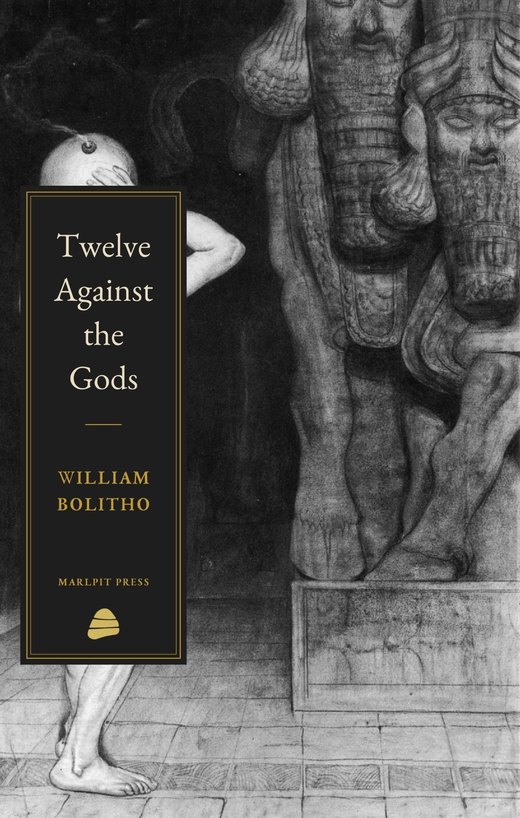
Twelve Against the Gods became his great popular success in 1929. He died at Avignon on 2 June 1930 after appendicitis and peritonitis, only thirty-nine years old. The sudden end of the career helped turn Bolitho into a cult figure almost as quickly as the book had turned him into a bestseller.