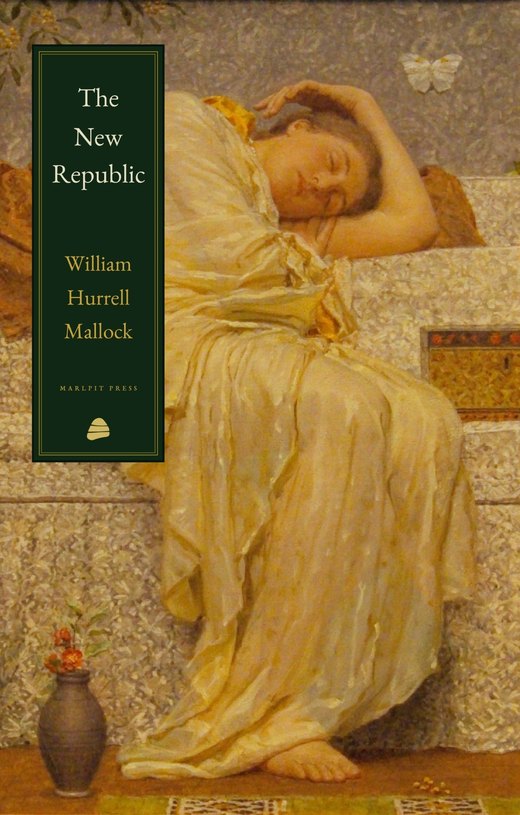
MARLPIT PRESSIndependent Publisher
A Victorian life built for controversy
William Hurrell Mallock was born on 7 February 1849 into a Devonshire gentry family with remarkable intellectual connections. His mother Margaret Froude made him the nephew of Richard Hurrell Froude, an early figure in the Oxford Movement; James Anthony Froude, the historian and religious skeptic; and William Froude, the pioneering engineer.
That family placed traditional religion, doubt, literature, history, science, and social rank inside Mallock’s immediate world. His own childhood faith was strong and literal. The erosion of that certainty became one of the central problems of his writing.
Balliol and The New Republic
Mallock attended Balliol College, Oxford, during Benjamin Jowett’s ascendancy and won the Newdigate Prize in 1871. He encountered the very culture he would soon parody: aestheticism, religious liberalism, scientific naturalism, social criticism, and the cultivated conversation of late Victorian intellectual life.
Parts of The New Republic appeared in 1876, and the book was published in volume form in 1877, when Mallock was twenty-eight. Its fictional country-house guests were recognizable enough to make the book both a literary success and a social event.
Religion, politics, and the later Mallock
Mallock continued writing for decades on religion, political economy, socialism, democracy, culture, and inequality. He was a polemicist with strong convictions and a taste for argument, and many of his later positions remain contentious.
The enduring interest of The New Republic lies partly in catching him before those later controversies hardened into a public identity. The young Mallock is still dramatizing a question rather than simply delivering an answer: what can give life a rational aim when inherited supernatural belief is no longer secure?