 MARLPIT PRESSIndependent Publisher
Who Is Who in W. H. Mallock’s The New Republic?
The New Republic is funnier when its country-house guests are recognized, but Mallock’s caricatures are more than a Victorian guessing game. Each speaker embodies an argument about culture, religion, science, art, pleasure, or the meaning of life.
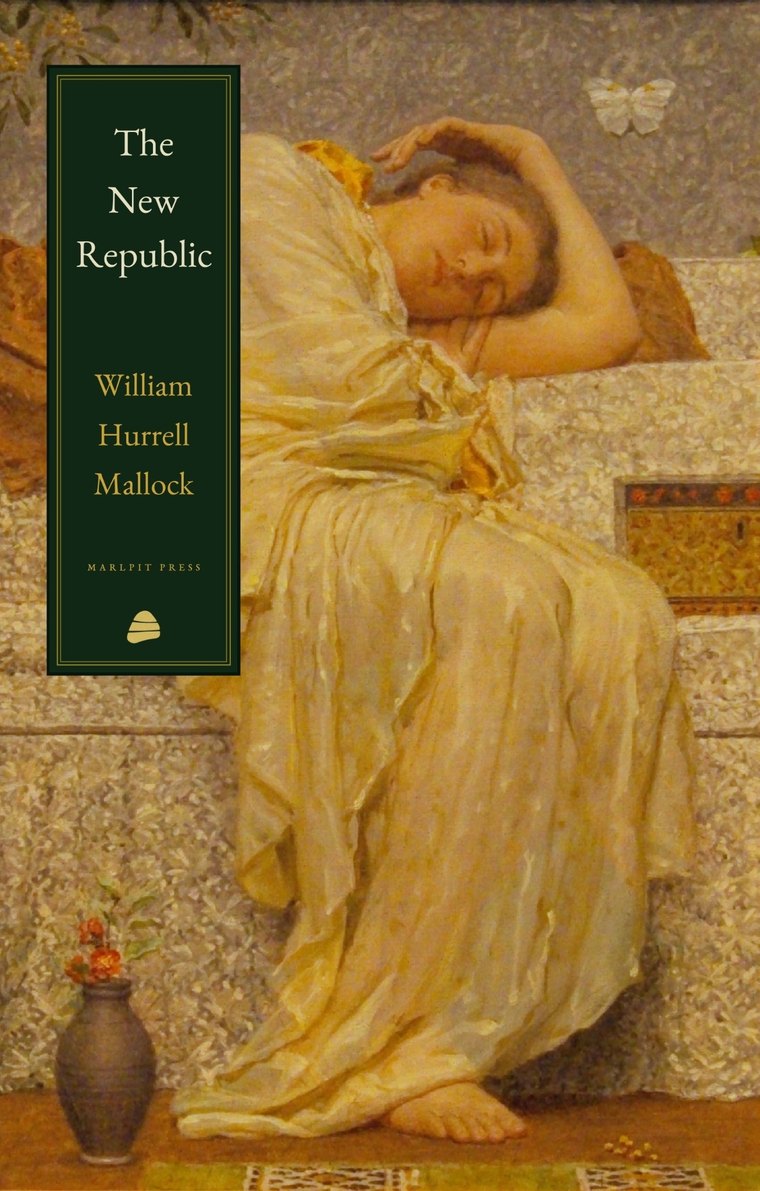
A roman à clef with a philosophical purpose
Mallock gathered recognizable intellectual types inside an English country house and let them talk, flirt, posture, lecture, and contradict one another. Contemporary readers had little difficulty connecting many of the guests with living celebrities.
The book’s comic method depends on imitation. Mallock borrows verbal habits, intellectual positions, social mannerisms, and public reputations. Yet the characters are not always one-to-one portraits. Some are composites or exaggerations, and the philosophical architecture matters more than perfect biographical decoding.
Benjamin Jowett and the Oxford world
Mallock had studied at Balliol College during Benjamin Jowett’s ascendancy, so his satire of Oxford liberal culture came from direct experience. Jowett, the famous Master of Balliol and translator of Plato, represented a form of cultivated religious liberalism that fascinated and irritated Mallock.
The country-house setting turns the abstract question of liberal theology into manners. Certainty dissolves politely over dinner rather than in a theological treatise.
Matthew Arnold, culture, and refinement
Matthew Arnold’s public voice, with its language of culture, sweetness and light, and cultivated judgment, offered Mallock rich material. The Arnoldian type in the novel becomes a test case for the idea that culture itself might replace older religious authority.
Mallock’s suspicion is that refinement can describe what a good life looks like without finally explaining why that life is binding. The parody therefore targets both Arnold’s style and a larger attempt to make culture carry moral weight once theology weakens.
Walter Pater and aestheticism
Walter Pater is the most sensitive figure in the book’s afterlife. Mallock’s treatment of the Paterian aesthete mocks a life organized around exquisite sensation, cultivated pleasure, and the intensity of experience. Because Pater was a living Oxford don whose private life was already vulnerable to scrutiny, the satire became entangled with a much harsher personal and institutional controversy.
It is too neat to say that Mallock single-handedly ruined Pater’s career. The evidence describes a more complicated Oxford environment involving private accusations and pre-existing tensions. Still, The New Republic participated in a culture where literary caricature could become socially dangerous.
Ruskin, science, and the rest of the table
John Ruskin supplied another recognizable target, representing moralized art criticism, social conscience, and prophetic intensity. Scientific naturalists associated with Thomas Huxley, John Tyndall, and W. K. Clifford stand behind other voices, bringing evolutionary science, materialism, and secular ethics into the room.
Mallock’s achievement is to make these positions collide in conversation. Instead of presenting a chart of Victorian thought, he makes philosophies compete for social charm, erotic attraction, moral seriousness, and rhetorical control.
The real question behind the game
Mallock later said the central problem was the “rational aim of life.” That phrase explains why the key to the book is not merely “which character is Pater?” The larger question is what each worldview can offer once supernatural belief is no longer secure.
Knowing the models sharpens the comedy. Understanding the argument explains why the comedy mattered.
Research basis
This note draws on primary and scholarly material assembled for the Marlpit Press edition and research dossier.
- W. H. Mallock, The New Republic (1877)
- Mallock’s memoir and later statements on the book
- Oxford and Balliol biographical records
- Contemporary and later accounts of Pater, Arnold, Ruskin, Jowett, Huxley, Tyndall, and Clifford
Continue reading
The New Republic edition · William Hurrell Mallock biography