 MARLPIT PRESSIndependent Publisher
A. E. J. Rawlinson and Liberal Catholic Anglicanism
Rawlinson wanted Catholic Christianity strong enough to retain creed, sacrament, Church, and worship while remaining intellectually free enough to face historical criticism honestly.
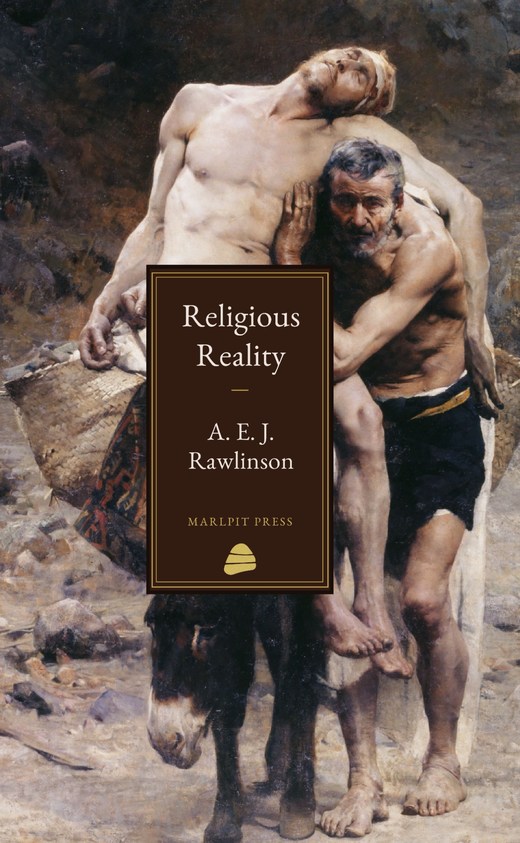
Read the book
Why “Liberal Catholic” is the right description
Rawlinson’s theology is Catholic in its stress on the visible Church, sacramental life, inherited worship, creed, ministry, continuity, and corporate religion.
It is liberal in its insistence that historical inquiry, scientific knowledge, responsible conscience, and intellectual freedom belong inside Christian faith rather than outside it.
His own religious formation
Rawlinson did not simply inherit Anglo-Catholicism. He was raised in a Congregationalist family and entered Oxford as an agnostic.
His movement into Anglican Christianity helps explain why he remained suspicious of religious systems that demanded intellectual submission before honest inquiry.
Protestantism and Catholicism
In Religious Reality, Rawlinson credits Protestantism with personal religion, freedom of inquiry, simplicity, conscience, and individual responsibility.
He credits Catholicism with the corporate Church, sacramental life, historical continuity, communal worship, and accumulated devotional wisdom.
A Catholicism with freedom
Rawlinson does not solve the Protestant-Catholic conflict by thinning both sides down. He wants a Catholicism capacious enough to internalize the Protestant demand for freedom without surrendering Catholic substance.
That position later becomes more explicit in books such as Catholicism with Freedom and Authority and Freedom.
Historical criticism without theological collapse
Rawlinson accepts serious historical study of Scripture and does not require mechanical inerrancy. Gospel discrepancies or imperfect details do not, in his view, erase the historically compelling figure of Jesus.
This makes him useful for readers interested in supernatural Christianity that accepts modern critical scholarship without reducing Christianity to ethics or symbolism.
Research basis
This note draws on Rawlinson’s 1918 book, contemporary reviews, archival records, and modern scholarship assembled for the Marlpit Press research dossier.
- A. E. J. Rawlinson, Religious Reality: A Book for Men (1918)
- The Expository Times, May 1918
- International Journal of Ethics, July 1919
- Timothy E. Daykin, Authority in Liberal Catholic Anglicanism
- Graham Wilcox, study of Rawlinson in the Journal of Anglican Studies
- Durham Cathedral archival catalogue and London Gazette records
Continue reading
Religious Reality: A Book for Men · A. E. J. Rawlinson biography · Christianity & Theology · All research notes