A Christian book born in military hospitals
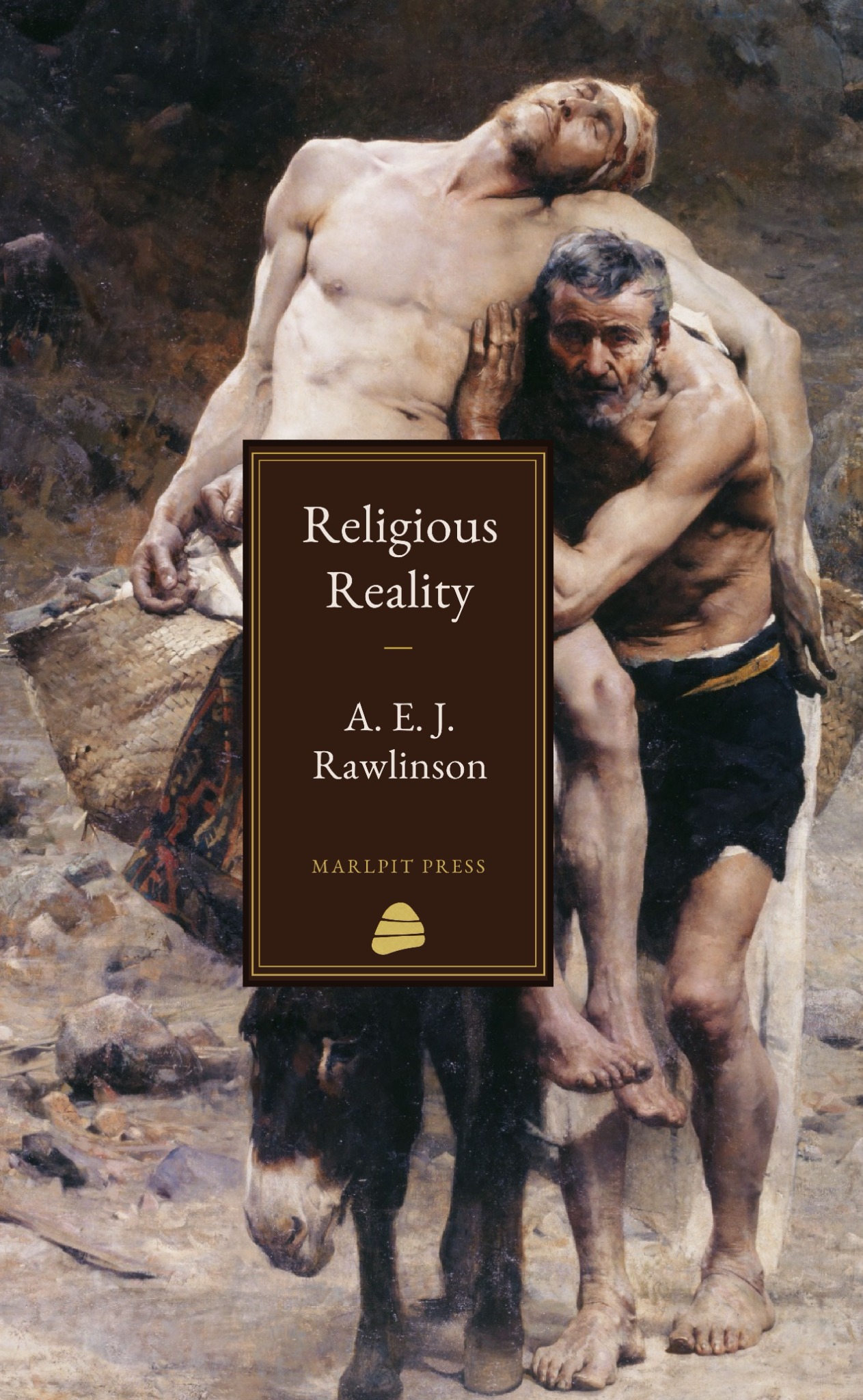
Religious Reality began as a practical answer to a wartime problem. Rawlinson had served as a temporary chaplain to the Forces from 1915 to 1917 and spent part of that work preparing officers and enlisted men in military hospitals for Confirmation.
In his November 1917 preface, he explained that the book grew directly out of those conversations. Time with each man was limited, and he could find no reasonably short book that presented Christian belief and Christian practice as a coherent whole.
That origin matters. Rawlinson was not writing a detached theological survey. He was trying to say, as clearly and compactly as possible, what Christianity means to adults facing injury, uncertainty, responsibility, moral failure, war, and death.
What Religious Reality actually covers
The book’s twenty-eight short chapters are divided into three large movements: what Christians believe, how Christians should live in the world, and the practices by which Christian life is sustained.
Rawlinson begins with Jesus Christ and moves through God, the Holy Spirit, the Trinity, evil, sin and redemption, the Church, Protestantism and Catholicism, the sacraments, ministry, Scripture, and Christian hope.
He then turns outward to work, commerce, labour, politics, war, education, marriage, sexual ethics, alcohol, social responsibility, and citizenship before ending with prayer, self-examination, repentance, corporate worship, Communion, Bible reading, almsgiving, and fasting.
Christian apologetics without anti-intellectualism
Rawlinson’s apologetic is strikingly comfortable with serious inquiry. He assumes that established historical or scientific truth cannot finally contradict Christian truth and that religious interpretation must be reconsidered when evidence demands it.
That places the book firmly inside the early-twentieth-century Anglican engagement with historical criticism. Rawlinson allows that biblical documents may contain discrepancies or imperfect detail while continuing to treat Scripture as the foundational literature of the Church and the Gospel portrait of Jesus as historically compelling.
For readers interested in Christianity that takes both supernatural claims and modern criticism seriously, this combination is one of the book’s strongest features.
Liberal Catholic Anglicanism
Rawlinson is best described as an Anglican Liberal Catholic. The phrase does real work. His Christianity is Catholic in its emphasis on creed, Church, sacrament, corporate worship, continuity, and disciplined spiritual practice. It is liberal in its insistence on historical criticism, freedom of inquiry, responsible conscience, and intellectual honesty.
The chapter on Protestantism and Catholicism makes the synthesis unusually clear. Rawlinson credits Protestantism with defending personal religion, simplicity, freedom of inquiry, and conscience. He credits Catholicism with preserving the visible Church, sacramental life, historical continuity, corporate worship, and accumulated devotional wisdom.
His goal is a liberalized Catholicism strong enough to retain Catholic substance while taking the Protestant demand for freedom seriously.
Christianity applied to work, labour, politics, and war
The social chapters are among the most historically interesting parts of the book. Rawlinson refuses to reduce Christian morality to private respectability. A person can avoid obvious private vice and still participate in economic or political arrangements that contradict Christian ideals.
He treats commerce as a form of social service before it is a means of private enrichment, criticizes economic systems that treat labour mechanically, takes the moral claims of the labour movement seriously, and argues that voting and public service can become forms of Christian responsibility.
His treatment of war is equally unsentimental. He believed Britain’s entry into the First World War could be defended, but he also regarded war as contrary to the fulfilled Christian ideal and sharply criticized clergy who confused Christianity with patriotic anger.
Why the subtitle A Book for Men is literal
The subtitle is not an old-fashioned synonym for humanity. Rawlinson is speaking specifically to adult male readers whose lives involve work, money, military service, politics, drinking, sexual temptation, courtship, marriage, and public responsibility.
That produces both directness and historical limitations. Women largely appear in relation to marriage, family, and male sexual responsibility, and the social world is imagined through strongly gendered early-twentieth-century roles.
At the same time, Rawlinson expects Christian men to take responsibility far beyond private piety. Sexual conduct, economic power, citizenship, war, and the treatment of workers all belong inside the moral life.
The three-part rule of Christian life
The architecture of the book is itself an argument. Christianity begins with a vision of reality, takes social and personal form in conduct, and survives only through disciplined practice.
Rawlinson therefore refuses to separate doctrine from ethics or ethics from spiritual discipline. Regular Communion, prayer, corporate worship, repentance, Bible reading, almsgiving, and fasting are not devotional ornaments. They are the means by which Christian convictions become durable habits.
For a soldier or convalescent who might soon be transferred or returned to duty, that final section functioned as a portable rule of life after the chaplain was gone.
What contemporary reviewers noticed
The earliest securely recovered notice appeared in The Expository Times in May 1918. It praised the book’s compression and breadth and gave the memorable verdict that what remained was the “pure gold of Christian evidence.”
A more analytical review appeared in the International Journal of Ethics in July 1919. The reviewer described Rawlinson as a “plain man for plain men,” called the book “pleasant and candid,” and identified the theological approach as modern and critical.
That second reviewer was especially struck by the ethical material: contraception, labour, war, education, clerical patriotism, and the idealism of the labour movement. Together the notices confirm the book’s unusual double identity as compact Christian apologetic and socially engaged theology.
About A. E. J. Rawlinson
Alfred Edward John Rawlinson (1884–1960) was an English Anglican priest, theologian, biblical scholar, and bishop. Raised in a Congregationalist family, he entered Oxford as an agnostic, moved toward Anglican Christianity during his undergraduate years, and became especially attracted to Anglo-Catholicism.
He studied at Corpus Christi College, Oxford, taught at Keble College and Christ Church, served as an Army chaplain during the First World War, and developed a theological program centered on authority, freedom, historical criticism, sacramental Christianity, and lived religious experience.
Rawlinson became Canon of Durham and Archdeacon of Auckland in 1929 and served as Bishop of Derby from 1936 to 1959. His later books included Catholicism with Freedom, Authority and Freedom, The New Testament Doctrine of the Christ, and The Church of England and the Church of Christ.
Why Religious Reality still matters
The book preserves a distinctive moment in Anglican theology: Catholic practice without biblical fundamentalism, critical scholarship without religious minimalism, and doctrinal seriousness joined to social ethics.
It is also unusually revealing evidence of wartime pastoral Christianity. Rawlinson had to decide what an adult man actually needed to understand when time was short and abstract theological completeness was impossible.
The result is less a systematic theology than a compressed map of Christian reality: what is true, what follows from it, and what practices might make that truth livable.
Wartime Christianity
Why A. E. J. Rawlinson Wrote Religious Reality
How military-hospital Confirmation work during the First World War produced a compact Christian book for adult men.
Read research noteContemporary reception
How Reviewers Received Religious Reality in 1918–1919
What The Expository Times and International Journal of Ethics actually praised, questioned, and found unusual.
Read research noteAnglican theology
A. E. J. Rawlinson and Liberal Catholic Anglicanism
How Rawlinson combined sacramental Catholic Christianity, historical criticism, intellectual freedom, and a strong doctrine of the Church.
Read research noteChristian social ethics
Religious Reality on War, Labour, Politics, and Work
Why Rawlinson thought Christianity had to judge economic life, nationalism, labour relations, citizenship, and war.
Read research noteChristian books for men
What Does “A Book for Men” Mean in Religious Reality?
Why Rawlinson addressed male readers directly about work, politics, military service, sex, marriage, discipline, worship, and responsibility.
Read research note MARLPIT PRESSIndependent Publisher