 MARLPIT PRESSIndependent Publisher
Why A. E. J. Rawlinson Wrote Religious Reality
The book began with a repeated wartime pastoral problem: how do you explain Christianity as a whole to adults when time is short and the questions are real?
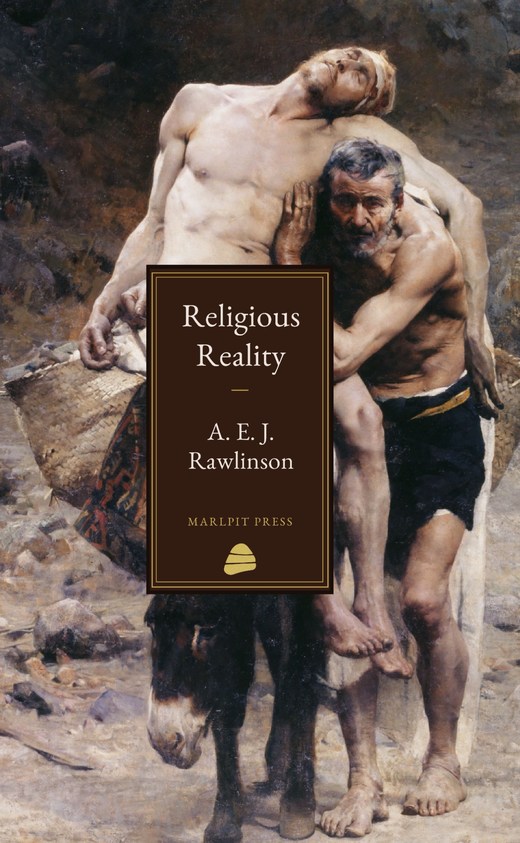
Read the book
The evidence is unusually direct
Rawlinson dated his author’s preface November 1917 and explained that the book had grown out of preparing officers and enlisted men in military hospitals for Confirmation.
He said the published chapters expanded what he had wanted to say when time and opportunity were limited, and that he could find no reasonably short book covering Christian faith and practice as a whole from the standpoint he wanted.
Why a military hospital changed the form
The intended reader might be wounded, convalescent, transferred, discharged, or returned to duty. A chaplain could not assume months of instruction.
That pressure explains the book’s extreme compression. Rawlinson needed a portable map of Christianity rather than a theological encyclopedia.
Belief, conduct, maintenance
The book therefore follows a practical three-part structure. Part I explains Christian belief. Part II asks what those beliefs require in social and personal life. Part III gives the practices by which Christian life is maintained.
The sequence resembles adult formation rather than abstract system-building: know what Christianity claims, understand what it demands, and learn how to continue living it.
The war is inside the book
The manuscript was completed while the First World War was still being fought. Rawlinson discusses military service, patriotism, conscientious objection, war itself, and the social reconstruction he expected after demobilization.
His military experience gives those chapters their unusual tension. He defended Britain’s entry into the war while insisting that war remained morally degrading and that Christian clergy must not become mouthpieces for jingoistic nationalism.
Why the origin still matters
Knowing how Religious Reality began changes how the book reads. Its brevity, directness, breadth, and constant movement from doctrine into conduct are not accidental stylistic choices.
They are the marks of a theology first tested in conversation with adults for whom Christianity had to become more than inherited language.
Research basis
This note draws on Rawlinson’s 1918 book, contemporary reviews, archival records, and modern scholarship assembled for the Marlpit Press research dossier.
- A. E. J. Rawlinson, Religious Reality: A Book for Men (1918)
- The Expository Times, May 1918
- International Journal of Ethics, July 1919
- Timothy E. Daykin, Authority in Liberal Catholic Anglicanism
- Graham Wilcox, study of Rawlinson in the Journal of Anglican Studies
- Durham Cathedral archival catalogue and London Gazette records
Continue reading
Religious Reality: A Book for Men · A. E. J. Rawlinson biography · Christianity & Theology · All research notes