 MARLPIT PRESSIndependent Publisher
How Many Endings Did Hemingway Write for A Farewell to Arms?
The famous answer is thirty-nine. The manuscript archive makes the story even more complicated, and more revealing about Hemingway’s method.
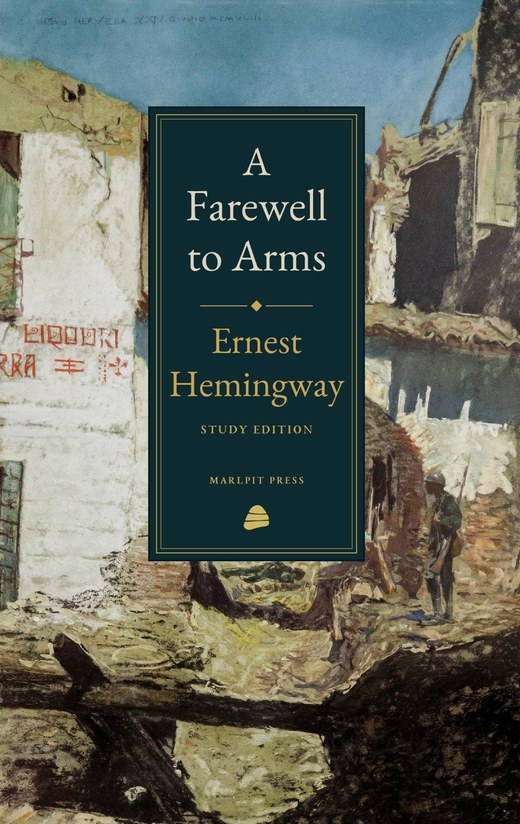
Read the book
“Getting the words right”
In George Plimpton’s 1958 Paris Review interview, Hemingway said that he had rewritten the last page of A Farewell to Arms thirty-nine times before he was satisfied. Asked what had caused the difficulty, he answered with a phrase that became one of the best summaries of his craft: “Getting the words right.”
The remark helped create the familiar image of Hemingway as an obsessive reviser. In this case, the surviving papers show that the anecdote understated rather than exaggerated the amount of material.
Why the archive gives different numbers
The John F. Kennedy Presidential Library currently catalogs forty-four distinct handwritten drafts of the ending. A 2016 JFK exhibition referred to “some 47 versions,” and the 2012 Hemingway Library Edition published forty-seven alternative endings or ending variants.
These counts do not require Hemingway’s thirty-nine to be false. A scholar can count complete endings, partial drafts, fragments, recombinations, and copied versions differently. The safe historical conclusion is that the ending was rewritten dozens of times and survives in more forms than the famous number suggests.
What Hemingway was changing
Some drafts extended the aftermath. Others tried to explain the tragedy philosophically, shifted emphasis toward the child, or gave Frederic a more explicit statement of what he had learned. The alternatives show Hemingway repeatedly testing how much meaning the final scene should state.
The published ending rejects most of that explanation. Frederic leaves the hospital and walks back to the hotel in the rain. The action is simple, but its simplicity is the product of repeated decisions about what to remove.
Why the endings matter
The archive is useful because it makes Hemingway’s understatement visible as a process. The published prose can look inevitable only after the reader has been denied the discarded explanations, extensions, and emphases surrounding it.
That is one reason the ending belongs at the center of any serious study of Hemingway’s style. Omission was not merely a principle he announced later. The drafts show him manufacturing omission through revision.
Research basis
This note draws on the archival and contemporary sources assembled for the Marlpit Press Complete Study Edition.
- George Plimpton, interview with Ernest Hemingway, The Paris Review (1958)
- Ernest Hemingway Collection, John F. Kennedy Presidential Library and Museum
- 2012 Hemingway Library Edition of A Farewell to Arms
- JFK Library manuscript exhibitions and ending counts
Continue reading
A Farewell to Arms: The Complete Study Edition · Ernest Hemingway biography · All research notes