 MARLPIT PRESSIndependent Publisher
What Is C. D. Broad’s Emergent Materialism?
Broad’s emergence is much stronger than saying that wholes have properties their parts do not. The key question is whether higher-level facts can be derived from lower-level ones.
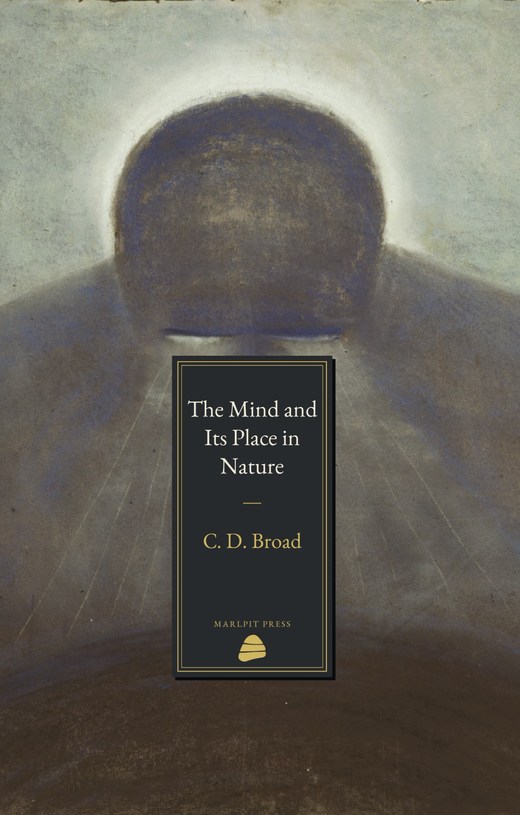
Mechanism sets the standard
For Broad, a mechanistic theory says more than that complex things are composed of simpler parts. It says that once the lower-level constituents, their arrangement, and their laws are completely known, the characteristic behavior of the whole follows in principle.
Reduction therefore makes a very strong predictive claim.
What emergence means
A genuinely emergent characteristic is one that cannot be derived in that way. Even an ideally informed reasoner must discover a new higher-level law or encounter the relevant kind of whole before knowing how it behaves.
This makes emergence a thesis about explanatory autonomy, not merely about complexity.
Emergent consciousness
Applied to mind, emergent materialism allows mentality to depend on organized material systems while remaining irreducible to the lower-level physical facts.
Mentality is therefore real and causally significant without being an independently existing Cartesian substance.
The qualification people often miss
Broad’s own final position is conditional. If one restricts the evidence to ordinary psychological and physical phenomena, he says emergent materialism is, on the whole, the most reasonable view.
When he adds the psychical-research evidence he regarded as better established, he gives higher probability to a modified Compound Theory compatible with emergent materialism. A precise account of Broad should preserve that qualification.
Why the theory still matters
Historical accounts of British emergentism routinely culminate in Broad’s 1925 book because he states the reduction problem with unusual precision.
Modern debates about strong emergence, reduction, supervenience, higher-level laws, and consciousness continue to revisit the explanatory structure Broad isolated.
Research basis
This note draws on Broad’s 1925 book, contemporary reviews, Trinity College archival material, and modern scholarship assembled for the Marlpit Press C. D. Broad research dossier.
- C. D. Broad, The Mind and Its Place in Nature (1925)
- Trinity College Library, Cambridge, Papers of C. D. Broad
- Bertrand Russell, reviews in The Nation and the Athenaeum and Mind
- L. Susan Stebbing, Philosophy (1926)
- Stanford Encyclopedia of Philosophy, Charlie Dunbar Broad
- David J. Chalmers, Consciousness and Its Place in Nature
- Modern scholarship on British emergentism and Broad’s philosophy of mind
Continue reading
The Mind and Its Place in Nature · C. D. Broad biography · Philosophy & Mind · All research notes