 MARLPIT PRESSIndependent Publisher
From natural science to philosophy
Charlie Dunbar Broad was born on 30 December 1887 at Harlesden, Middlesex. His first intellectual formation was scientific: mathematics and natural science preceded his move into philosophy.
At Trinity College, Cambridge, Broad took a first in Natural Sciences before switching to Moral Sciences and graduating with first-class distinction. That scientific background remained visible throughout his career in his unusually exact treatment of mechanism, causation, physics, biology, and the limits of reduction.
Cambridge, Russell, and McTaggart
Broad’s early Cambridge formation brought him into contact with Bertrand Russell, G. E. Moore, J. M. E. McTaggart, and W. E. Johnson. His 1911 Trinity fellowship dissertation concerned the philosophy of mechanics and fed into his first major book, Perception, Physics, and Reality.
McTaggart remained especially important. After McTaggart’s death in 1924, Broad became his sole literary executor and later edited the second volume of The Nature of Existence.
St Andrews, Dundee, and Bristol
Broad taught at St Andrews and Dundee, where the influence of G. F. Stout and A. E. Taylor broadened his philosophical range. During the First World War he combined teaching with work in a chemical laboratory for the Ministry of Munitions.
He became Professor of Philosophy at Bristol in 1920 and joined the Society for Psychical Research in the same year.
Return to Trinity and the Tarner Lectures
In 1922 Trinity invited Broad back both to replace McTaggart on the teaching staff and to give the second course of Tarner Lectures. The lectures were delivered in Michaelmas 1923.
Broad was deeply dissatisfied with the lectures as delivered and spent much of 1924 rewriting and enlarging them. The result was The Mind and Its Place in Nature, published in 1925.
Critical and speculative philosophy
Broad distinguished two complementary philosophical tasks. Critical philosophy clarifies concepts, separates ambiguities, and exposes hidden assumptions. Speculative philosophy attempts a synoptic view of reality consistent with science and the widest available evidence.
His characteristic procedure was to enumerate the possible theories, state exactly what each committed one to, and only then rank them by evidence. The famous seventeen-way taxonomy of mind and matter is the fullest expression of that method.
Emergence and consciousness
Broad became the culminating figure of classical British emergentism. His account of emergence asked whether the behavior or qualities of a complex whole could in principle be derived from complete lower-level knowledge.
His “mathematical archangel” passage has become particularly important in contemporary philosophy of consciousness because it anticipates the idea that complete physical knowledge may still fail to provide knowledge of phenomenal character.
Psychical research
Broad’s interest in psychical research was a serious and lifelong part of his philosophical work. He served twice as president of the Society for Psychical Research, in 1935 and 1958.
He approached the subject with characteristic caution. Paranormal claims were not exempt from alternative explanations, but he also refused to rule alleged phenomena out merely because they sat awkwardly with prevailing materialist assumptions.
Knightbridge Professor and later work
Broad became Knightbridge Professor of Moral Philosophy at Cambridge in 1933 and held the chair until 1953. He also served twice as president of the Aristotelian Society.
His major works include Scientific Thought, Five Types of Ethical Theory, the two-volume Examination of McTaggart’s Philosophy, and later writings on determinism, induction, probability, religion, ethics, and psychical research.
Death and philosophical legacy
Broad died in his rooms at Trinity College on 11 March 1971, aged eighty-three.
His lasting importance lies less in founding a school than in leaving unusually precise maps of philosophical problems. Later philosophers continue to use his distinctions even when they reject his conclusions.
Marlpit Press edition
All books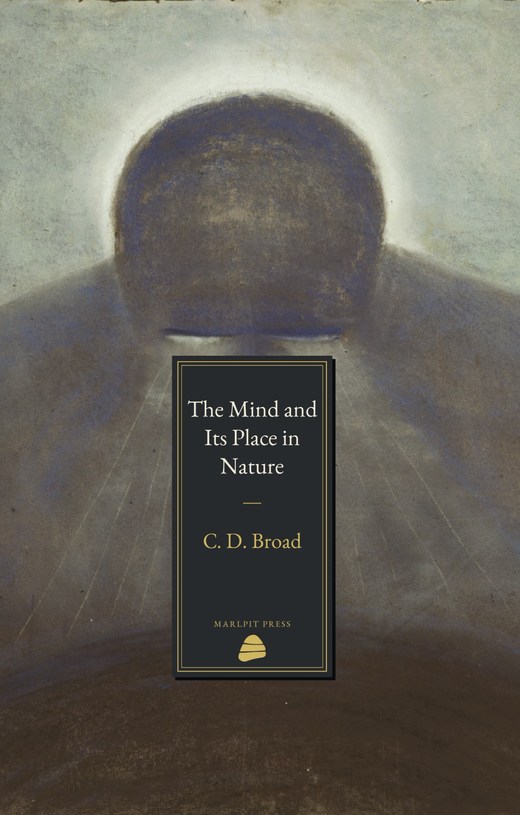
Research notes
All notesC. D. Broad’s Mathematical Archangel and the Knowledge Argument
How Broad’s 1925 thought experiment anticipated later arguments that complete physical knowledge may fail to reveal what experience is like.
Read research noteWhat Is C. D. Broad’s Emergent Materialism?
Broad’s precise theory of emergence, why it differs from simple reduction, and the qualification needed to state his final position accurately.
Read research noteC. D. Broad’s Seventeen Theories of Mind and Matter
Why Broad refused the simple materialism-dualism-idealism trilemma and mapped seventeen possible relations between mind and matter.
Read research noteWhy C. D. Broad Took Psychical Research Seriously
How survival, telepathy, clairvoyance, fraud, and other hypotheses became evidence in Broad’s larger philosophy of mind.
Read research noteHow The Mind and Its Place in Nature Was Received
Bertrand Russell, the Times Literary Supplement, L. Susan Stebbing, and the unusually broad reception of Broad’s 1925 book.
Read research note