 MARLPIT PRESSIndependent Publisher
C. D. Broad’s Seventeen Theories of Mind and Matter
Broad thought the standard three-way debate hid too many distinct possibilities. His final chapter turns the mind-body problem into a map.
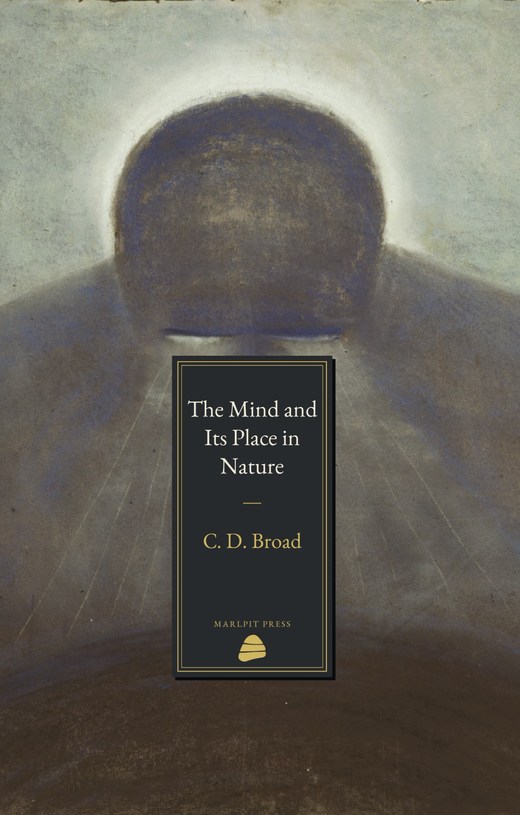
Why three labels are not enough
Materialism, dualism, and idealism sound exhaustive only when several independent questions are bundled together.
A mental or material characteristic might be fundamental, emergent, reducible, or delusive. Mental and material attributes may also arise from or combine with a neutral basis in different ways.
The divide-and-conquer method
Broad separates those independent dimensions and generates the combinations. The result is a classification of seventeen possible types of mind-matter theory.
He then eliminates some views on logical grounds and ranks the surviving theories against the ordinary and abnormal evidence.
Why the taxonomy matters
The taxonomy prevents one theory from winning merely because a badly stated rival fails. A rejection of reductive materialism, for example, does not by itself establish Cartesian dualism.
Every surviving theory inherits its own explanatory obligations.
Broad’s own ranking
With normal evidence alone, Broad prefers emergent materialism. With the psychical-research evidence included, he favors a modified Compound Theory that remains compatible with an emergent picture.
The point is methodological as much as metaphysical: the ranking changes when the evidential set changes.
David Chalmers and Broad’s method
David Chalmers later adopted the same basic strategy of enumerating coherent positions on consciousness before comparing their costs and benefits.
His essay Consciousness and Its Place in Nature deliberately echoes Broad in both title and method.
Research basis
This note draws on Broad’s 1925 book, contemporary reviews, Trinity College archival material, and modern scholarship assembled for the Marlpit Press C. D. Broad research dossier.
- C. D. Broad, The Mind and Its Place in Nature (1925)
- Trinity College Library, Cambridge, Papers of C. D. Broad
- Bertrand Russell, reviews in The Nation and the Athenaeum and Mind
- L. Susan Stebbing, Philosophy (1926)
- Stanford Encyclopedia of Philosophy, Charlie Dunbar Broad
- David J. Chalmers, Consciousness and Its Place in Nature
- Modern scholarship on British emergentism and Broad’s philosophy of mind
Continue reading
The Mind and Its Place in Nature · C. D. Broad biography · Philosophy & Mind · All research notes