 MARLPIT PRESSIndependent Publisher
C. D. Broad’s Mathematical Archangel and the Knowledge Argument
In 1925 Broad asked whether complete physical knowledge could reveal what an unfamiliar experience is like. The question sounds startlingly modern.
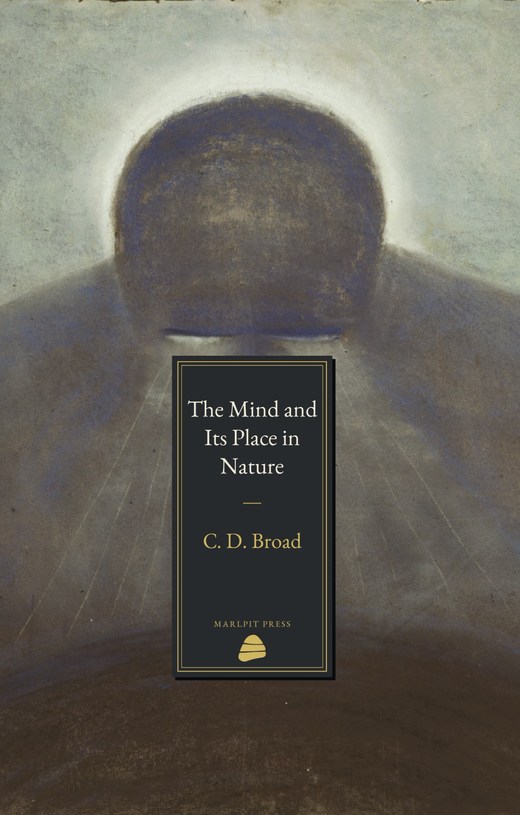
The archangel thought experiment
Broad imagines an intellect with complete microscopic knowledge of the structure and laws governing a physical system. If a property is fully mechanistic, such an intellect should in principle be able to derive how the system behaves without first encountering it.
Broad then asks what happens with qualitative experience. Could an intellect that had never encountered a particular smell or sensation deduce its qualitative character from physical and chemical knowledge alone?
Why this matters for consciousness
Broad’s point is not simply that an actual human scientist lacks enough information. The issue concerns derivability in principle. Even ideal lower-level knowledge may leave something about qualitative consciousness unknown.
That gives the argument a family resemblance to later debates about phenomenal knowledge, the explanatory gap, and whether complete physical information exhausts what can be known about experience.
Broad before Jackson’s Mary
The resemblance to Frank Jackson’s later Mary thought experiment is real, although the arguments are not identical. Broad frames the problem through emergence and predictive deduction rather than the later vocabulary of complete physical information.
David Chalmers explicitly identifies Broad’s archangel as an early version of the knowledge argument. This puts the 1925 book into the prehistory of one of the central modern arguments about consciousness.
What Broad does not infer
Broad does not leap from the explanatory gap to a simple Cartesian soul. His more cautious suggestion is that qualitative mental characteristics may be emergent: dependent on organized material conditions but not reducible to lower-level physical description.
The archangel therefore belongs inside Broad’s broader analysis of emergence rather than functioning as a stand-alone proof of dualism.
Research basis
This note draws on Broad’s 1925 book, contemporary reviews, Trinity College archival material, and modern scholarship assembled for the Marlpit Press C. D. Broad research dossier.
- C. D. Broad, The Mind and Its Place in Nature (1925)
- Trinity College Library, Cambridge, Papers of C. D. Broad
- Bertrand Russell, reviews in The Nation and the Athenaeum and Mind
- L. Susan Stebbing, Philosophy (1926)
- Stanford Encyclopedia of Philosophy, Charlie Dunbar Broad
- David J. Chalmers, Consciousness and Its Place in Nature
- Modern scholarship on British emergentism and Broad’s philosophy of mind
Continue reading
The Mind and Its Place in Nature · C. D. Broad biography · Philosophy & Mind · All research notes