 MARLPIT PRESSIndependent Publisher
Why C. D. Broad Took Psychical Research Seriously
Broad’s chapters on psychical research are part of the architecture of the book. They test how much a theory of mind can rule out before looking at the evidence.
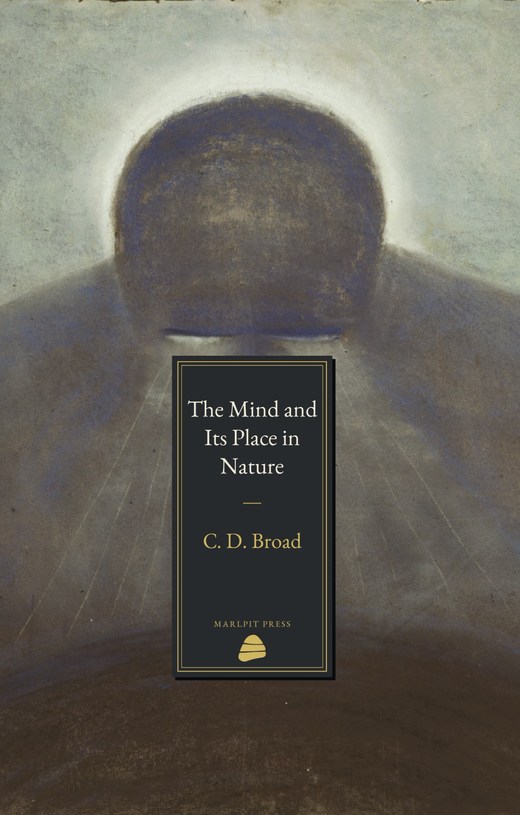
The subject belongs to the book
If the question is what place mind occupies in nature, evidence that mental agency, information, or personal characteristics can occur outside familiar sensory and neural channels would be directly relevant.
Broad therefore regarded psychical research as a potential stress test for general theories of mind rather than a detachable curiosity.
A competitive-hypothesis approach
Broad does not treat an unexplained event as proof of survival. Fraud, chance, suggestion, normal information channels, cryptomnesia, telepathy among the living, clairvoyance, and other explanations have to be compared.
Survival after bodily death is one hypothesis in a larger explanatory competition.
Why theoretical discomfort is not evidence
Broad knew many philosophers and scientists disliked the subject in advance. His methodological response was that disciplinary expectations cannot decide what nature is allowed to contain.
The relevant question is whether the alleged facts withstand scrutiny and, if they do, which theory best explains them.
The effect on his final metaphysics
Ordinary evidence led Broad toward emergent materialism. The psychical evidence he judged stronger prevented him from treating that as the whole story.
He therefore assigned greater probability to a modified Compound Theory compatible with emergent materialism and allowing persistent psychic factors beyond the familiar nervous system.
A lifelong interest
Broad joined the Society for Psychical Research in 1920 and later served twice as its president. His engagement with the subject continued long after the 1925 book.
The survival chapters are therefore best read as part of a sustained philosophical research program.
Research basis
This note draws on Broad’s 1925 book, contemporary reviews, Trinity College archival material, and modern scholarship assembled for the Marlpit Press C. D. Broad research dossier.
- C. D. Broad, The Mind and Its Place in Nature (1925)
- Trinity College Library, Cambridge, Papers of C. D. Broad
- Bertrand Russell, reviews in The Nation and the Athenaeum and Mind
- L. Susan Stebbing, Philosophy (1926)
- Stanford Encyclopedia of Philosophy, Charlie Dunbar Broad
- David J. Chalmers, Consciousness and Its Place in Nature
- Modern scholarship on British emergentism and Broad’s philosophy of mind
Continue reading
The Mind and Its Place in Nature · C. D. Broad biography · Philosophy & Mind · All research notes