 MARLPIT PRESSIndependent Publisher
George Salmon on Newman and Doctrinal Development
Salmon’s central question is simple: if a doctrine can develop, what historical evidence would count as corruption rather than legitimate growth?
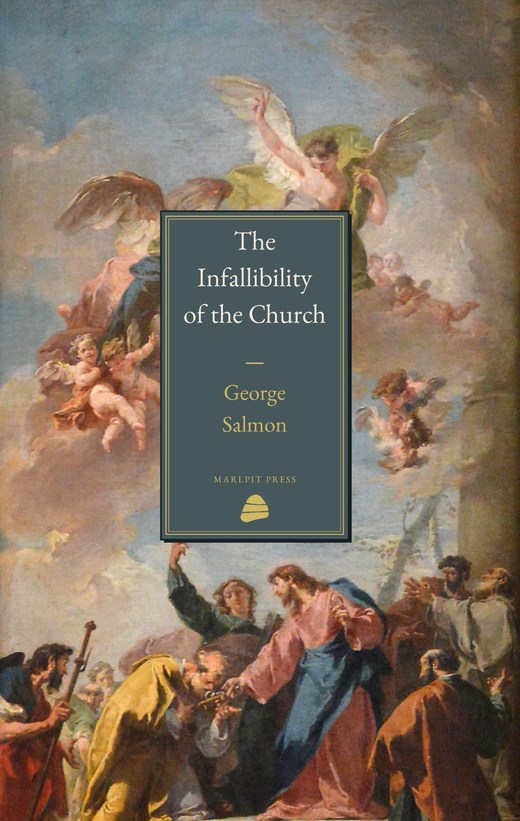
Read the book
Why development enters the argument
Many later Catholic doctrines are not stated in the earliest Christian sources in precisely the conceptual form they later acquired. A theory of development explains how continuity can exist without verbal identity.
Salmon understands why such a theory is necessary, especially in the wake of Newman.
The falsifiability challenge
Salmon worries that an overly elastic theory of development can make historical discontinuity impossible to detect. If absence, novelty, or reversal can always be redescribed as organic growth, what evidence could ever count against a claimed development?
His challenge is therefore methodological: state the criteria by which genuine development is distinguished from corruption.
Newman’s reply is already more sophisticated
Newman himself did not claim that every later development is legitimate. He proposed tests or notes of genuine development and distinguished development from corruption.
The live debate therefore concerns the adequacy and application of those criteria rather than the crude claim that any later doctrine is automatically false.
Why Salmon still matters here
Salmon is most useful when he forces appeals to “tradition” or “development” to become explicit about which witnesses count, how disagreement is weighed, and what continuity should look like.
Those questions remain central to Catholic-Protestant debate over authority and historical theology.
Research basis
This note draws on Salmon’s 1888 book, contemporary reception, Catholic replies, Trinity College Dublin and Royal Society biographical material, and the source-critical George Salmon research dossier prepared for the Marlpit Press edition.
- George Salmon, The Infallibility of the Church (John Murray, 1888)
- George Salmon’s 1888 preface
- First Vatican Council, Pastor Aeternus (1870)
- Alfred Plummer, The Churchman (January 1889)
- Jeremiah Murphy, Irish Ecclesiastical Record (1901–1902)
- Catholic Encyclopedia, “Infallibility”
- B. C. Butler, The Church and Infallibility (1954)
Continue reading
The Infallibility of the Church · George Salmon biography · Christianity & Theology · All research notes