 MARLPIT PRESSIndependent Publisher
Is A Farewell to Arms Autobiographical?
The novel is rooted in Hemingway’s war wound, Milan convalescence, and first great love, but its most famous events belong to deliberate invention and historical research.
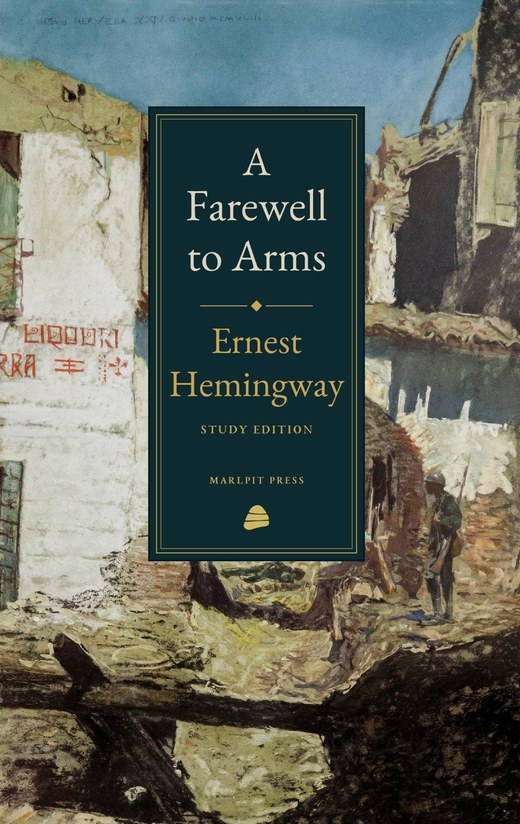
Read the book
The autobiographical starting point
Hemingway reached Italy with the American Red Cross in June 1918. On July 8, at eighteen, he was badly wounded near Fossalta di Piave while distributing cigarettes, chocolate, and other supplies to Italian soldiers. He recovered in an American Red Cross hospital in Milan, where he met the twenty-six-year-old nurse Agnes von Kurowsky.
The surviving letters and Agnes’s diary complicate the familiar story that she merely humored a teenager’s infatuation. Their feelings became serious enough that they appear to have considered themselves engaged, even while Agnes remained worried about Hemingway’s youth and their age difference. She ended the relationship by letter in March 1919.
What entered the novel
The wounding, hospital world, Italian landscape, Stresa, and the emotional memory of loving a nurse all entered Hemingway’s fiction. Catherine Barkley nevertheless is not Agnes with a new name. Catherine is British, Agnes was American; the age-gap problem largely disappears; and the lovers’ final story is entirely different.
Hemingway had already used a recognizable version of Agnes in “A Very Short Story.” A decade later, A Farewell to Arms allowed him to return to related emotional material with much greater distance, combining memory with later experience and invention.
What came from 1928 rather than 1918
The most important later-life contribution was Pauline Hemingway’s difficult labor while the novel was being written. Patrick Hemingway was born in Kansas City on June 28, 1928, after a long delivery. Hemingway continued writing through this period, and the difficult childbirth supplied a much closer imaginative source for Catherine’s final ordeal than the relationship with Agnes.
Patrick survived. Catherine’s baby is stillborn and Catherine dies. The transformation is a useful reminder that biographical sources can explain where material came from without reducing a novel to a coded diary.
The event Hemingway never saw
The retreat from Caporetto occurred in October and November 1917. Hemingway did not arrive in Italy until 1918. Frederic’s experience of the retreat therefore cannot be eyewitness autobiography.
Hemingway researched the Italian campaign deliberately, collecting wartime photographs, aerial views, maps, and other material. The novel’s relationship to life is best understood as transformation: firsthand sensory and emotional knowledge enlarged by research into events Hemingway had not witnessed.
Research basis
This note draws on the archival and contemporary sources assembled for the Marlpit Press Complete Study Edition.
- Ernest Hemingway Collection, John F. Kennedy Presidential Library and Museum
- Agnes von Kurowsky diary and correspondence
- The Letters of Ernest Hemingway, Volume 3: 1926–1929
- 1929 text and manuscript history of A Farewell to Arms
Continue reading
A Farewell to Arms: The Complete Study Edition · Ernest Hemingway biography · All research notes