 MARLPIT PRESSIndependent Publisher
Theras and His Town: Reading Level & Curriculum Use
The book has never belonged to one rigid grade level. Its history makes more sense if you separate listening level, independent-reading level, and curricular use.
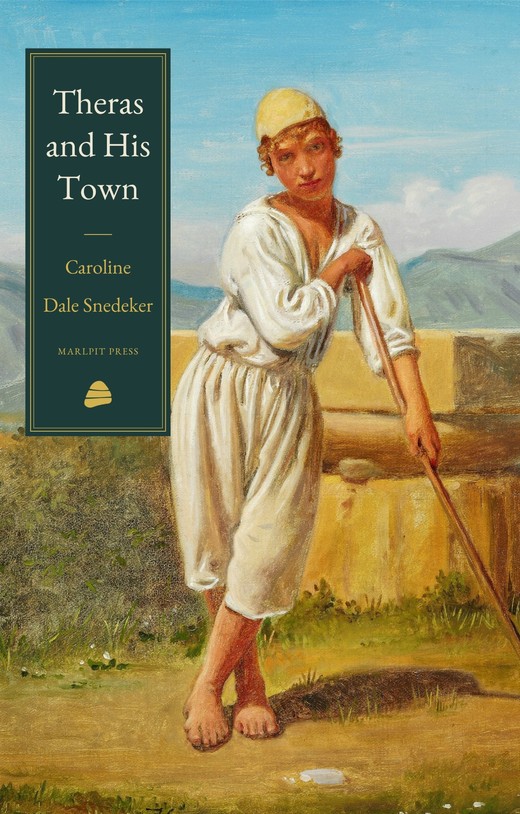
Why the grade question has several answers
The prose is older and more patient than most contemporary middle-grade fiction, but the story itself is accessible. The early chapters carry substantial cultural information; the later chapters become a much faster escape adventure.
A child who can follow sustained read-aloud prose may enjoy it earlier than a child who is expected to read and narrate it independently. That is why historical and current curriculum placements vary.
What contemporary reviewers said
The 1925 Spectator review explicitly emphasized accessibility, observing that quite young children could follow the story when it was read aloud while adults could enjoy the reconstruction of Greek life.
In 1926, children’s librarian Elva S. Smith valued the book as both story and education and regarded it as suitable for the upper-elementary and early-middle-school range.
How Christian homeschool programs use it now
Sonlight currently includes Theras within a literature-based World History program, and Veritas Press includes it within its New Testament, Greece & Rome homeschool materials.
Those placements reinforce the best practical use: treat the book as literature that supplies historical texture. It works especially well when children already have a simple chronological framework and can place Athens, Sparta, Pericles, and the Greek world on a map.
A practical homeschool recommendation
For younger students, use it as a family read-aloud and discuss the changing experience of Theras as he moves from Athens to Sparta. For stronger independent readers, assign chapters with short oral or written narrations rather than turning every page into a worksheet.
The book rewards a light touch. Its educational power comes from allowing the reader to absorb the world while caring about the boy inside it.
Research basis
This note is based on the source-critical research assembled for the Marlpit Press edition and, where noted, current curriculum-provider listings.
- The Spectator, “An Athenian Boy,” April 25, 1925
- Elva S. Smith, The Elementary English Review, June 1926
- Sonlight current curriculum listings
- Veritas Press current curriculum listings
Continue reading
Theras and His Town · Caroline Dale Snedeker biography · Christian homeschool classics · All research notes