 MARLPIT PRESSIndependent Publisher
From Arkansas to social research
Katharine Susan Anthony was born in Roseville, Arkansas, on November 27, 1877. She studied at Heidelberg and Freiburg in Germany and later received a Ph.B. from the University of Chicago. The degree is sometimes misreported online as a Ph.D.; contemporary biographical records support Ph.B.
Anthony taught English at Wellesley College in 1907–1908 and then moved into social research in New York. Her work included the Bureau of Social Research and Russell Sage Foundation publications, placing her inside the Progressive Era world of empirical investigation, labor reform, and women’s social conditions.
Feminism, suffrage, and the study of women’s lives
Anthony’s early career was openly connected to the women’s movement. Contemporary records document her involvement with the Woman’s Trade Union League, the Woman’s Political Union, and the Woman Suffrage Party of New York City.
Her 1914 book Mothers Who Must Earn examined wage-earning mothers through field research. The following year she published Feminism in Germany and Scandinavia. These books established questions that would remain central when she turned to biography: work, family, sexuality, social expectations, dependence, and the ways women construct agency inside restrictive institutions.
A psychological biographer
Anthony’s decisive transition came with Margaret Fuller: A Psychological Biography in 1920. The book used the new vocabulary of psychology to reinterpret childhood, family relations, intimacy, and motivation rather than treating biography as a sequence of public events.
She followed it with Catherine the Great in 1925 and an edited translation of Catherine’s memoirs in 1927. By the later 1920s Anthony had developed a recognizable specialty: vivid biographies of powerful women in which private life and public authority continually illuminate one another.
Queen Elizabeth
Queen Elizabeth appeared in 1929 after what Anthony’s publisher described as roughly three years of work. The book was selected by the Literary Guild for October and quickly attracted reviews in The New Yorker, TIME, The Spectator, The Nation, and the Journal of Modern History.
Anthony’s Elizabeth is built around childhood, the Thomas Seymour crisis, Leicester, Alençon, Mary Stuart, the Armada, Essex, and the queen’s refusal of marriage. The method made the book unusually readable and psychologically coherent, while historians objected to its lack of footnotes, compressed institutional history, and overconfident treatment of religion.
Later biographies and legacy
Anthony continued writing major lives of women for three decades. Her later subjects included Marie Antoinette, Louisa May Alcott, Dolley Madison, Susan B. Anthony, and Mercy Otis Warren.
Modern scholarship places her near the origins of feminist biography in the United States. Her importance lies in the combination of social research, women’s-rights politics, psychology, and literary biography that allowed her to treat historical women as complicated agents rather than exemplary heroines or appendages to famous men.
Marlpit Press edition
All books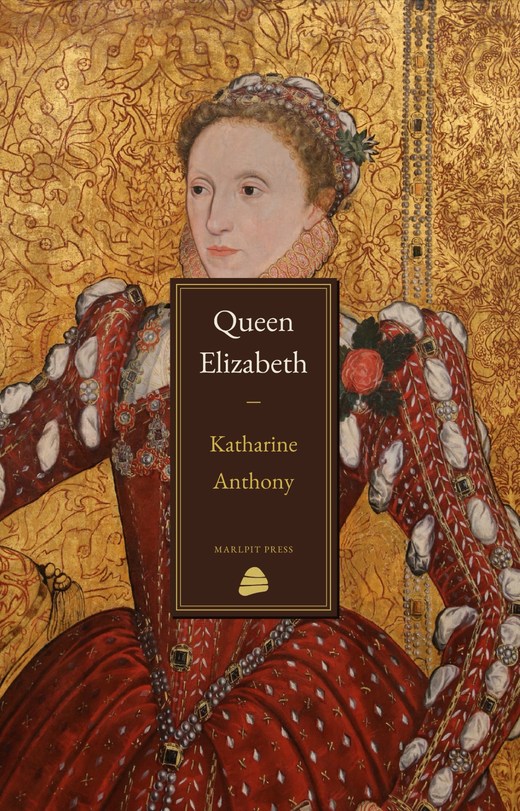
Research notes
All notesHow Accurate Is Katharine Anthony’s Queen Elizabeth?
What Anthony gets right about personality and female sovereignty, where her 1929 psychological method overreaches, and why her religious history needs caution.
Read research noteKatharine Anthony and the New Biography
How a feminist social researcher became a psychological biographer, and where Queen Elizabeth fits beside Strachey and the interwar revolution in life-writing.
Read research noteHow Reviewers Received Queen Elizabeth in 1929
The New Yorker admired the intimate portrait, The Spectator was divided, and a professional historian attacked the book’s method and documentation.
Read research note