 MARLPIT PRESSIndependent Publisher
How Reviewers Received Queen Elizabeth in 1929
Literary reviewers admired Anthony’s intimate, fast-moving Elizabeth. Professional historians worried about exactly the same qualities.
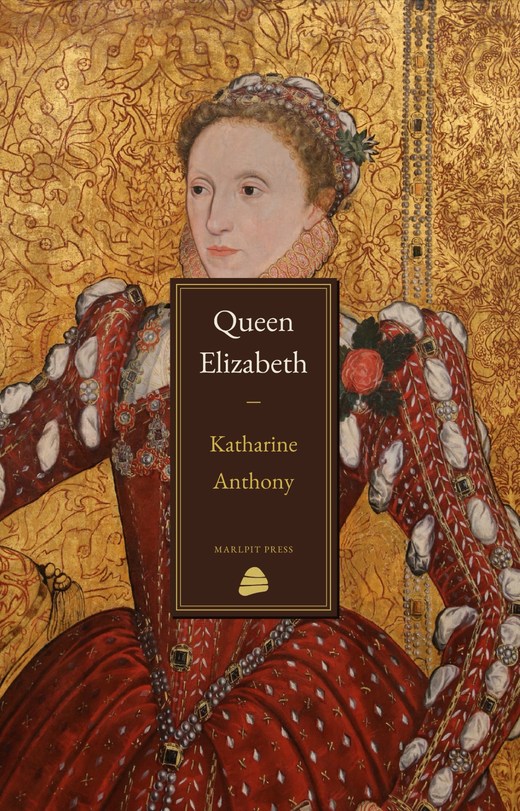
Immediate national attention
Queen Elizabeth was copyrighted on October 4, 1929 and selected by the Literary Guild for October. That book-club choice gave it a national audience almost immediately.
The New Yorker published Agnes W. Smith’s substantial review on October 19, and TIME followed on October 21. The book remained in The New Yorker’s recommendation listings repeatedly through the holiday season and into January 1930.
The New Yorker: admiration without reverence
Smith liked Anthony’s compact, practical, unsentimental portrait. Her memorable summary was “justice without gallantry, admiration without illusion.”
Her reservation was equally useful: the book was narrowly personal. Anthony had deliberately removed much of the larger historical noise so the queen herself would remain in focus.
The Spectator: interesting but too glib
The London review in The Spectator was mixed to negative. Its critic disliked Anthony’s habit of replacing a complicated historical explanation with a clever psychological formula.
Even so, the reviewer praised several specific parts of the book, including Anthony’s interpretation of the Thomas Seymour episode, the Alençon chapter, and her insight into Elizabeth’s ability to identify herself with England.
The professional historian’s attack
Harold Hulme’s March 1930 review in the Journal of Modern History was much harsher. He objected to the lack of footnotes, thin use of primary documentation, omissions in political and religious history, and contradictions in Anthony’s treatment of Elizabeth’s religious upbringing.
His review is valuable because several concrete complaints can be checked against Anthony’s text and are justified, even if his standards assume a more academic kind of book than Anthony intended to write.
Why the disagreement matters
The split in reception is almost a definition of the book. For literary readers, compression, anecdote, psychology, and pace made history vivid. For specialist historians, those same choices made the evidentiary seams too difficult to audit.
The 1929 reviews therefore remain one of the best guides to Queen Elizabeth. They show readers arguing in real time over the boundary between responsible history and biography written with the immediacy of literature.
Research basis
This note draws on the source-critical research assembled for the Marlpit Press edition.
- Agnes W. Smith, The New Yorker, October 19, 1929
- TIME, October 21, 1929
- The Spectator, November 23, 1929
- Harold Hulme, Journal of Modern History, March 1930
- The Vagabond, Indiana University, March 1930
- Research dossier supplied for the Marlpit Press edition
Continue reading
Queen Elizabeth · Katharine Anthony biography · History & Biography · All research notes