 MARLPIT PRESSIndependent Publisher
Princeton and the refusal of an ordinary life
Richard Halliburton was born on January 9, 1900, in Brownsville, Tennessee, and grew up in comfortable circumstances in Memphis. He attended Lawrenceville School and entered Princeton in 1917, graduating with the Class of 1921.
The philosophy that later made him famous appeared early. Even before graduation Halliburton wrote about the need to move faster, avoid an “even tenor” of life, and refuse the predictable professional future that seemed to await his classmates.
The 1921–23 journey
After Princeton, Halliburton set out on the journey that became The Royal Road to Romance. It carried him across Europe, North Africa, India, the Himalayas, Southeast Asia, China, and Japan.
He climbed the Matterhorn, was arrested at Gibraltar, slept on the Great Pyramid, swam in the Nile and Taj Mahal reflecting pool, traveled through Kashmir and Ladakh, crossed the Khyber Pass, visited Angkor, reported an encounter with pirates near Macau, and climbed Mount Fuji alone in winter.
Lecturer before bestselling author
Halliburton returned to the United States in March 1923 with travel material but no easy literary career. He struggled to sell articles in New York and then found his audience on the lecture circuit.
That experience was crucial. Live audiences taught him how to pace a story, build suspense, play comedy, and transform the personality of the traveler into part of the entertainment. The Royal Road to Romance grew out of that performance apprenticeship.
The Royal Road to Romance
Bobbs-Merrill accepted the manuscript in 1924 only after other publishers had rejected it and after requiring substantial cuts. Halliburton fought to keep the title.
Published in 1925, the book became a bestseller for three years and appeared in fifteen languages. It made the twenty-five-year-old Halliburton a national celebrity and established the formula that would define the rest of his career.
Books, stunts, lectures, and modern celebrity
Halliburton’s later books included The Glorious Adventure, New Worlds to Conquer, The Flying Carpet, Seven League Boots, and the Book of Marvels volumes.
His career joined travel, live speaking, photographs, newspaper stories, radio, publicity stunts, and self-consciously spectacular experiences. Adventure produced publicity; publicity sold lectures and books; books financed the next adventure.
The Sea Dragon and disappearance
In 1939 Halliburton attempted one final spectacular journey: sailing a Chinese junk called the Sea Dragon from Hong Kong to San Francisco for the Golden Gate International Exposition.
During severe Pacific weather on March 23, the vessel sent its last radio communications. Halliburton, his collaborator and companion Paul Mooney, and the rest of the crew were never seen again. Halliburton was thirty-nine.
Legacy
Halliburton’s literary reputation declined even while his books continued shaping generations of young readers. Critics mocked his theatricality, exaggeration, juvenility, and publicity instincts, but those qualities were closely connected to what made him effective.
His deepest cultural influence was aspirational. He made distant places feel reachable and adventure feel like a possible answer to ordinary life. Long before modern personality-driven travel media, Halliburton had made the traveler inseparable from the journey.
Marlpit Press edition
All books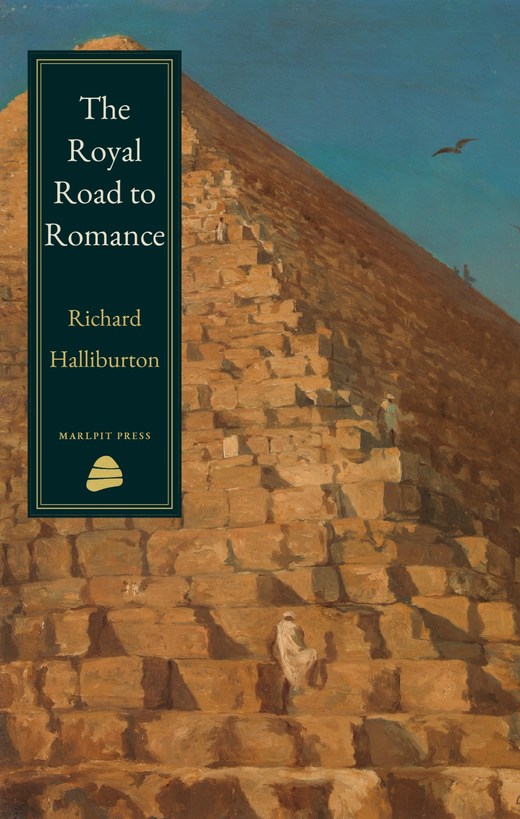
Research notes
All notesThe Royal Road to Romance — Review & Historical Value
Why Halliburton’s 1925 bestseller still works, where its early-twentieth-century assumptions show, and how to read it a century later.
Read research noteWhere Richard Halliburton Goes in The Royal Road to Romance
A precise guide to the 1921–23 journey: Matterhorn, Gibraltar, Egypt, India, the Himalayas, Angkor, China, and Mount Fuji.
Read research noteHow Reviewers Received The Royal Road to Romance in 1925
The book’s earliest critics saw exactly what readers loved: youth, speed, danger, emotional intoxication, charm, and the infectious fantasy of escape.
Read research noteHow Richard Halliburton Invented the Celebrity Travel Writer
Books, lectures, photographs, newspaper stunts, and personality-driven adventure made Halliburton feel surprisingly modern.
Read research note