 MARLPIT PRESSIndependent Publisher
Alfred Nutt Before Otto Rank: The Prehistory of the Hero Pattern
Twenty-eight years before Otto Rank published The Myth of the Birth of the Hero, Alfred Nutt was already breaking heroic biographies into recurring incidents and testing a comparative formula against Celtic legend.
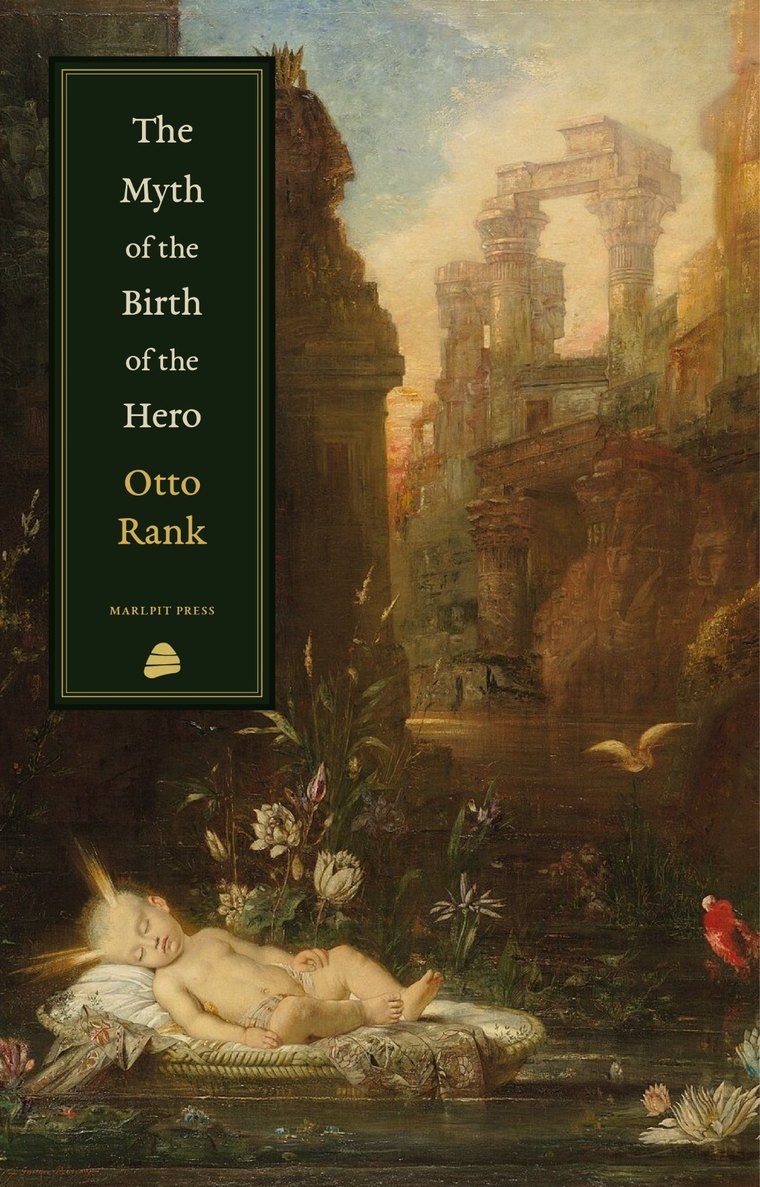
The formula did not begin with Rank
The history begins before Alfred Nutt. In 1876 the Austrian diplomat and folklorist Johann Georg von Hahn published a sixteen-point “Aryan Expulsion-and-Return Formula” describing a recurrent heroic biography. Nutt’s importance lies in what he did with that scheme rather than in inventing it.
In 1881, at only twenty-four, Nutt published The Aryan Expulsion-and-Return-Formula in the Folk and Hero Tales of the Celts. He tested von Hahn’s points against Celtic material including Fionn, Cuchulainn, Labhraidh Maen, Conall, Peredur and Perceval, Arthur, Merlin, and Taliesin.
A surprisingly modern comparative method
Nutt’s procedure looks strikingly structural. He breaks stories into incidents, tabulates which elements recur, distinguishes stable from unstable features, notices substitutions and omissions, and allows the formula to be corrected by the evidence. At the end he concedes that von Hahn’s sixteen points do not fit the Celtic corpus perfectly and predicts that a larger body of tales will require substantial modification.
That willingness to revise the scheme matters. Nutt was not treating a formula as a mystical key into which every story had to be forced. He was using a provisional model to compare narrative structure. Decades before Vladimir Propp, he was already thinking in terms of recurrent narrative units and transformations.
Why Nutt and Rank look so similar
The overlap with Rank is real. Both traditions identify exceptional or royal parentage, irregular conception, warning or prophecy, persecution of the child, exposure, rescue by animals or humble fosterers, growth away from the original home, recovery of identity, return, conflict with the persecutor, and eventual triumph.
Rank’s “standard legend” is especially close to the birth, expulsion, fosterage, and return sequence at the center of the von Hahn-Nutt tradition. The obvious temptation is to draw a straight line from Nutt to Rank.
No evidence of direct borrowing
The surviving evidence does not justify that straight line. Rank’s 1922 German text contains no reference to Alfred Nutt. He does cite Johann Georg von Hahn, but the citation is to Hahn’s 1864 collection of Greek and Albanian folktales rather than the 1876 volume containing the hero formula. Modern historians have therefore described Rank’s reconstruction as apparently independent.
There is an intriguing indirect connection. Rank cites Edwin Sidney Hartland’s The Legend of Perseus, a major comparative work published by Alfred Nutt’s firm. Hartland thanked Nutt for reading proofs and providing extensive help, especially on Celtic tradition. That shows the scholarly networks overlapped, but it does not prove transmission of the 1881 formula to Rank.
Why the Nutt appendix belongs with Rank
The responsible conclusion is more interesting than a claim of plagiarism. Nutt and Rank represent successive phases of a long attempt to understand recurring heroic biography. Nutt’s phase is comparative and morphological. Rank’s phase takes the already visible pattern and makes it a problem of unconscious psychology.
Putting the two texts together allows a reader to see what disappears when Rank is treated as the beginning of the story. The Rankian hero pattern had a prehistory. Nutt occupies one of its most illuminating positions.
Research basis
This note draws on primary and scholarly material assembled for the Marlpit Press edition and research dossier.
- Johann Georg von Hahn, Sagwissenschaftliche Studien (1876)
- Alfred Nutt, The Folk-Lore Record 4 (1881)
- Edwin Sidney Hartland, The Legend of Perseus
- Robert A. Segal and later histories of the heroic biography
Continue reading
The Myth of the Birth of the Hero edition · Otto Rank biography · Rank: 1909 and 1922