 MARLPIT PRESSIndependent Publisher
Lewis Einstein, Theodore Roosevelt, and Algeciras
Einstein’s best foreign-policy insights came from discovering that even a well-placed American diplomat had seen only part of what Roosevelt was doing.
The first Moroccan crisis
The Algeciras Conference of 1906 was convened to resolve the first Moroccan crisis, a confrontation involving France, Germany, Spain, Morocco, Britain, and the wider European balance of power.
The United States participated despite its distance from the immediate dispute because Theodore Roosevelt had become involved in efforts to prevent the crisis from escalating.
Einstein inside the American delegation
Lewis Einstein served as secretary of the American delegation. He later recalled that dispatches passed through his hands and that the cipher was in his care.
That position sounds like the perfect vantage point. Yet Einstein discovered afterward that Roosevelt had been conducting important parts of the diplomacy privately through ambassadors and personal communications that never entered the ordinary flow of delegation traffic.
What the experience taught Einstein about Roosevelt
The discovery permanently complicated the public picture of Roosevelt as noisy, impulsive, and eager for credit. Einstein saw that Roosevelt could operate with secrecy, patience, and restraint when publicity would make settlement harder.
Roosevelt could privately mock or condemn a foreign leader and publicly flatter the same person if diplomacy required it. For Einstein, that was not hypocrisy so much as evidence that statesmanship required different language for different audiences.
The big stick as deterrence
Einstein therefore reads Roosevelt’s famous maxim about speaking softly and carrying a big stick as a practical theory of credibility. The point of visible strength was often to avoid the need to use it.
That insight connects Algeciras to Einstein’s treatment of Japan, Portsmouth, Venezuela, Santo Domingo, Cuba, the fleet, and other episodes in Roosevelt’s foreign policy.
Why Einstein’s perspective matters
Einstein was not merely reconstructing diplomacy from published documents decades later. He had participated in the machinery and had experienced its informational limits himself.
That does not make every judgment correct, but it makes his book unusually valuable as testimony from someone who understood how much serious diplomacy could happen through private letters, trusted intermediaries, informal conversations, threats, and deliberate silence.
Research basis
This note draws on the source-critical research assembled for the Marlpit Press edition.
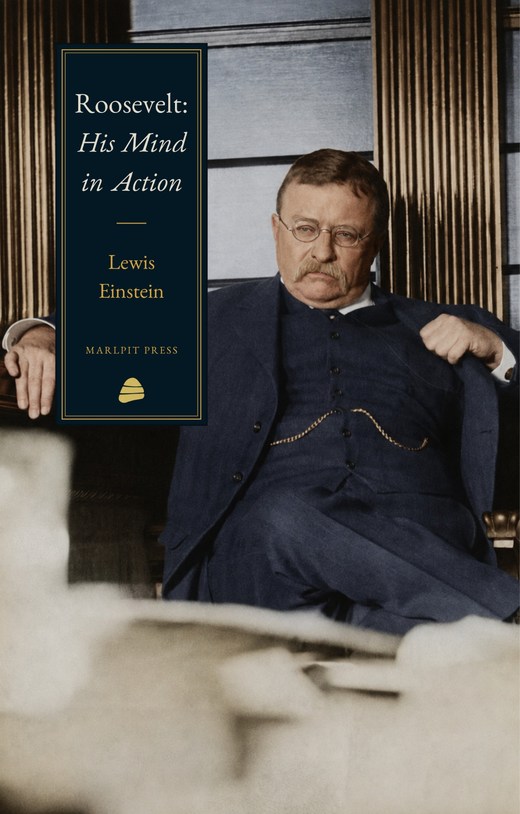
- Lewis Einstein, Roosevelt: His Mind in Action (1930)
- Theodore Roosevelt correspondence with Lewis Einstein
- U.S. Department of State diplomatic records
- Kenneth Weisbrode, Roosevelt’s Man in Europe (2016)
- Research dossier assembled for the Marlpit Press edition
Continue reading
Roosevelt: His Mind in Action · Lewis Einstein biography · History & Biography · All research notes