 MARLPIT PRESSIndependent Publisher
How Reviewers Received Roosevelt: His Mind in Action
Readers who valued psychological interpretation tended to see the book’s point. Readers who wanted new documentary history were much less persuaded.
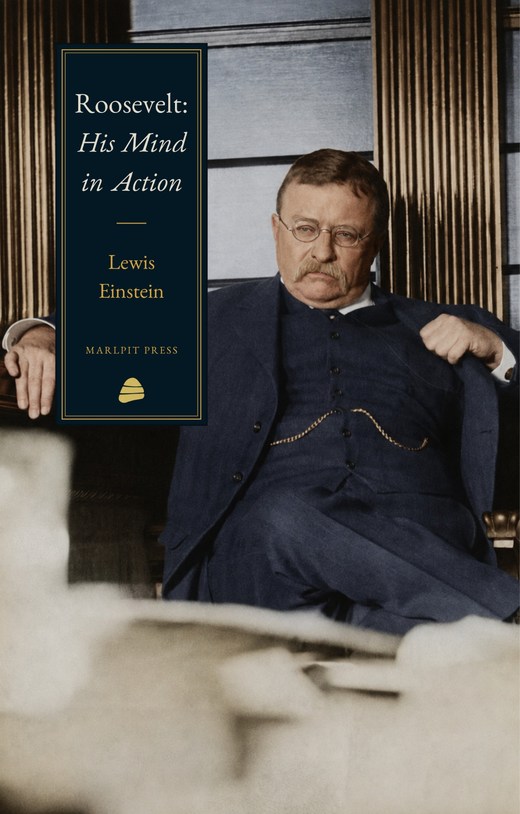
The Bookman: stimulating and readable
Foster Rhea Dulles reviewed the book in The Bookman in November 1930. He treated Einstein’s approach as distinctive because it was neither a conventional chronological life nor a simple memorial portrait.
Dulles was especially interested in Einstein’s treatment of Roosevelt’s effort to shape his reputation before posterity and ended with the description “stimulating and highly readable.”
Mississippi Valley Historical Review
C. S. Boucher reviewed Einstein alongside Owen Wister’s Roosevelt: The Story of a Friendship in June 1931.
The pairing itself is revealing. Wister offered intimate reminiscence from friendship; Einstein offered political and psychological interpretation. The surviving accessible bibliographic record confirms the review but does not provide a stable open transcription of its full judgments.
The TLS: why another Roosevelt book?
An unsigned Times Literary Supplement review on March 12, 1931 accepted important parts of Einstein’s characterization of Roosevelt but remained skeptical of the larger project.
The objection went to the heart of Einstein’s method. He had not discovered an unknown presidency. He had rearranged familiar evidence around motive and personality. A reviewer suspicious of psychological reconstruction could therefore question the need for the book at all.
Oliver Wendell Holmes Jr.
The most interesting private response came from Oliver Wendell Holmes Jr., who knew both men. On October 17, 1930 he told Einstein that the estimate seemed “wisely and delicately formed.”
Holmes also suspected that Einstein had made Roosevelt larger and more interesting than Roosevelt had seemed to him personally. That reservation captures the tension between portraiture and enlargement that runs through the book.
Why the mixed reception matters
The reviews reveal a historiographical divide that still exists. What counts as evidence when the subject is motive? How much may a biographer infer? When does psychological coherence illuminate a life, and when does it become a story imposed upon it?
Einstein’s book survived precisely because it gives the reader claims worth arguing with. Its value lies less in new chronology than in a distinctive interpretation of how Roosevelt’s personality operated.
Research basis
This note draws on the source-critical research assembled for the Marlpit Press edition.
- Foster Rhea Dulles, The Bookman, November 1930, p. 320
- C. S. Boucher, Mississippi Valley Historical Review 18, no. 1 (June 1931)
- Times Literary Supplement, March 12, 1931, p. 200
- The Holmes-Einstein Letters
- Research dossier assembled for the Marlpit Press edition
Continue reading
Roosevelt: His Mind in Action · Lewis Einstein biography · History & Biography · All research notes