 MARLPIT PRESSIndependent Publisher
Roosevelt: His Mind in Action — Review & Historical Value
Einstein’s 1930 book is selective and psychologically bold, but its analysis of leadership, publicity, diplomacy, ambition, and life after power remains unusually sharp.
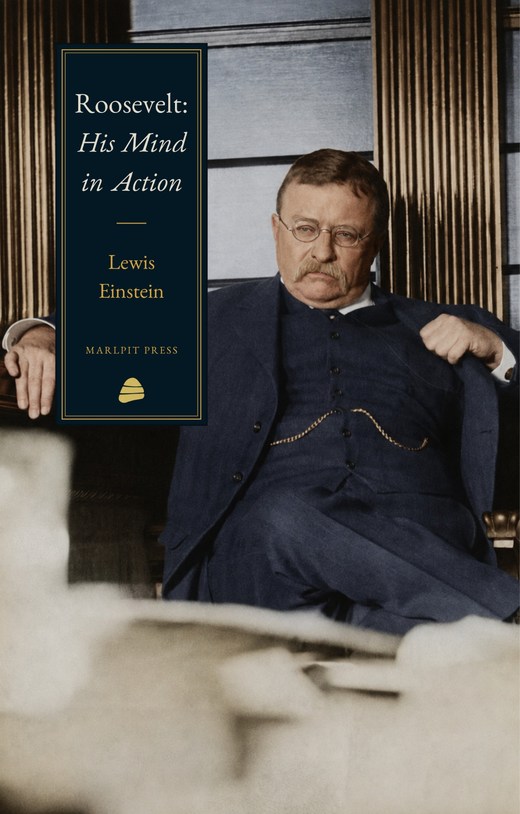
What kind of Theodore Roosevelt biography is it?
Roosevelt: His Mind in Action is a compact interpretive biography rather than a full documentary life. Einstein chooses episodes that reveal character and repeatedly asks how several motives could operate at once.
That method distinguishes it from both Roosevelt’s own Autobiography and memorial lives written by intimate friends. Einstein is interested in the mind behind the public performance.
What the book does best
Einstein is strongest on Roosevelt’s use of personality as political power. He sees that publicity, moral drama, physical vigor, personal recognition, press management, and public quarrels could become instruments of executive leadership.
He is also excellent on mixed motives. Roosevelt can be patriotic and ambitious, theatrical and sincere, moralistic and strategic. Einstein refuses the easy choice between saint and egotist.
The chapters on foreign policy benefit from Einstein’s own diplomatic experience, especially Algeciras, while the later chapters offer a perceptive account of what happened psychologically when Roosevelt retained the appetite for command after losing the presidency.
Where modern readers should be cautious
Einstein sometimes moves too confidently from documentary evidence to psychological inference. Statements about what Roosevelt felt unconsciously or “deep down” can outrun what the surviving sources can prove.
His political world is also narrow by modern standards. Race, Native policy, the Philippines, labor, conservation administration, and institutional Progressivism receive uneven treatment.
His assumptions about empire and stronger nations governing weaker ones belong to an interwar elite diplomatic culture and need to be read historically rather than accepted as neutral premises.
Why the book still matters
Later Theodore Roosevelt bibliographies have continued to single Einstein out because the book does something more durable than repeat events. It offers an argument about how Roosevelt made himself, made political authority personal, and helped make the legend through which later generations would remember him.
For a reader who already knows the outline of Roosevelt’s life, that interpretive focus can make the book more interesting than many larger early biographies.
Best way to read it today
Use Einstein beside a modern full biography rather than instead of one. Read him for political psychology, leadership, media instinct, diplomacy, and the perspective of a Roosevelt-era diplomat with personal access.
Read his blind spots too. The book is valuable partly because it reveals the assumptions of the interwar foreign-policy elite that inherited Roosevelt’s example.
Research basis
This note draws on the source-critical research assembled for the Marlpit Press edition.
- Lewis Einstein, Roosevelt: His Mind in Action (1930)
- Foster Rhea Dulles, The Bookman, November 1930
- C. S. Boucher, Mississippi Valley Historical Review, June 1931
- Times Literary Supplement, March 12, 1931
- Theodore Roosevelt Association annotated bibliography
- Research dossier assembled for the Marlpit Press edition
Continue reading
Roosevelt: His Mind in Action · Lewis Einstein biography · History & Biography · All research notes