 MARLPIT PRESSIndependent Publisher
Anglican theologian of the Catholic and critical tradition
Edward Gordon Selwyn was an English Anglican priest, scholar, editor, and churchman whose work belongs to the liberal Catholic or liberal Anglo-Catholic stream of twentieth-century Anglican theology.
His characteristic concern was synthesis: Catholic doctrine and worship with intellectual freedom, historical criticism, and serious engagement with modern psychology and philosophy.
Cambridge and classical scholarship
Selwyn had a distinguished classical education and academic career at Cambridge before entering full-time church work. His background in classical scholarship remained visible in the breadth of literary, historical, and philosophical reference found throughout his theology.
Radley, Red Hill, and the First World War era
He served as Warden of Radley College from 1913 and later became Rector of Red Hill near Havant. His theological work matured in the intellectual climate created by the First World War, when confidence in automatic progress and the moral authority of modern civilization had been badly shaken.
That setting is central to The Approach to Christianity, which opens from the conviction that science cannot by itself supply the moral or religious interpretation of human life.
Editor of Theology
From 1920 Selwyn edited Theology, a journal that became an important vehicle for liberal Catholic Anglican thought.
The role placed him at the center of debates over biblical criticism, psychology, modern philosophy, sacramental theology, Church authority, and the relation between historic doctrine and contemporary knowledge.
The Approach to Christianity
Published by Longmans, Green & Co. in 1925, The Approach to Christianity is Selwyn’s sustained attempt to defend the reality of supernatural Christianity while accepting the legitimacy of modern historical and critical scholarship.
Its scope runs from religious experience and the grounds of belief through revelation, history, Christ, Atonement, Resurrection, Christian character, the Church, and Anglican theology.
Friedrich von Hügel and religious experience
Friedrich von Hügel was a major influence on Selwyn’s account of religion. Selwyn learned from him to take experience, history, psychology, tradition, and institutional religion seriously at the same time.
That influence helps explain why Selwyn resists both rationalistic apologetic systems and purely subjective accounts of faith.
Essays Catholic and Critical
In 1926 Selwyn edited Essays Catholic and Critical, a major collection by Anglican scholars. The title captures his theological program with remarkable economy.
The volume sought to continue Catholic Christianity while engaging the results of biblical criticism and modern thought. It became an important document of interwar Anglican liberal Catholicism.
Dean of Winchester
Selwyn became Dean of Winchester in 1931 and remained in office until 1958. His long deanery combined preaching, scholarship, institutional leadership, and extensive work on the life and fabric of Winchester Cathedral.
Later scholarship and legacy
Selwyn continued to write on worship, Christian thought, and Scripture. His major later scholarly achievement was his work on the First Epistle of St. Peter.
His enduring interest lies in the theological position he helped define: a Christianity committed to the supernatural and the historic creeds, yet willing to expose its inherited formulations to critical scholarship rather than insulating faith from modern knowledge.
Marlpit Press edition
All books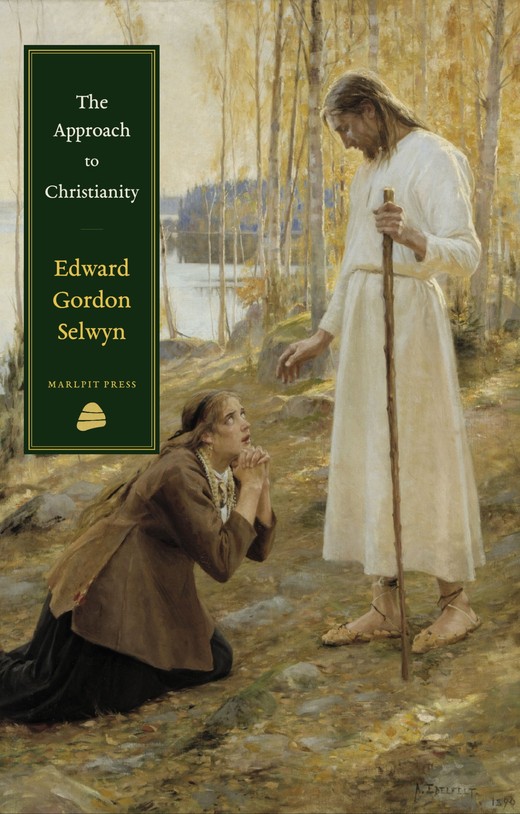
Research notes
All notesEdward Gordon Selwyn and Liberal Anglo-Catholicism
How Selwyn joined Catholic doctrine, sacramental Anglicanism, historical criticism, and intellectual freedom in the interwar Church of England.
Read research noteSupernatural Christianity and Historical Criticism
The central problem of The Approach to Christianity: whether modern criticism and psychology can be accepted without reducing Christianity to naturalism.
Read research noteSelwyn on the Resurrection and Historical Criticism
Why the Resurrection became a decisive test of Selwyn’s attempt to defend objective supernatural faith while taking modern biblical criticism seriously.
Read research noteSelwyn, Friedrich von Hügel, and Religious Experience
How von Hügel helped shape Selwyn’s treatment of religious experience, psychology, tradition, and the supernatural.
Read research noteHow The Approach to Christianity Was Received in 1926
A guide to the early review trail in The Journal of Theological Studies, The Churchman, and the London Quarterly Review.
Read research note