A supernatural Christianity willing to face modern criticism
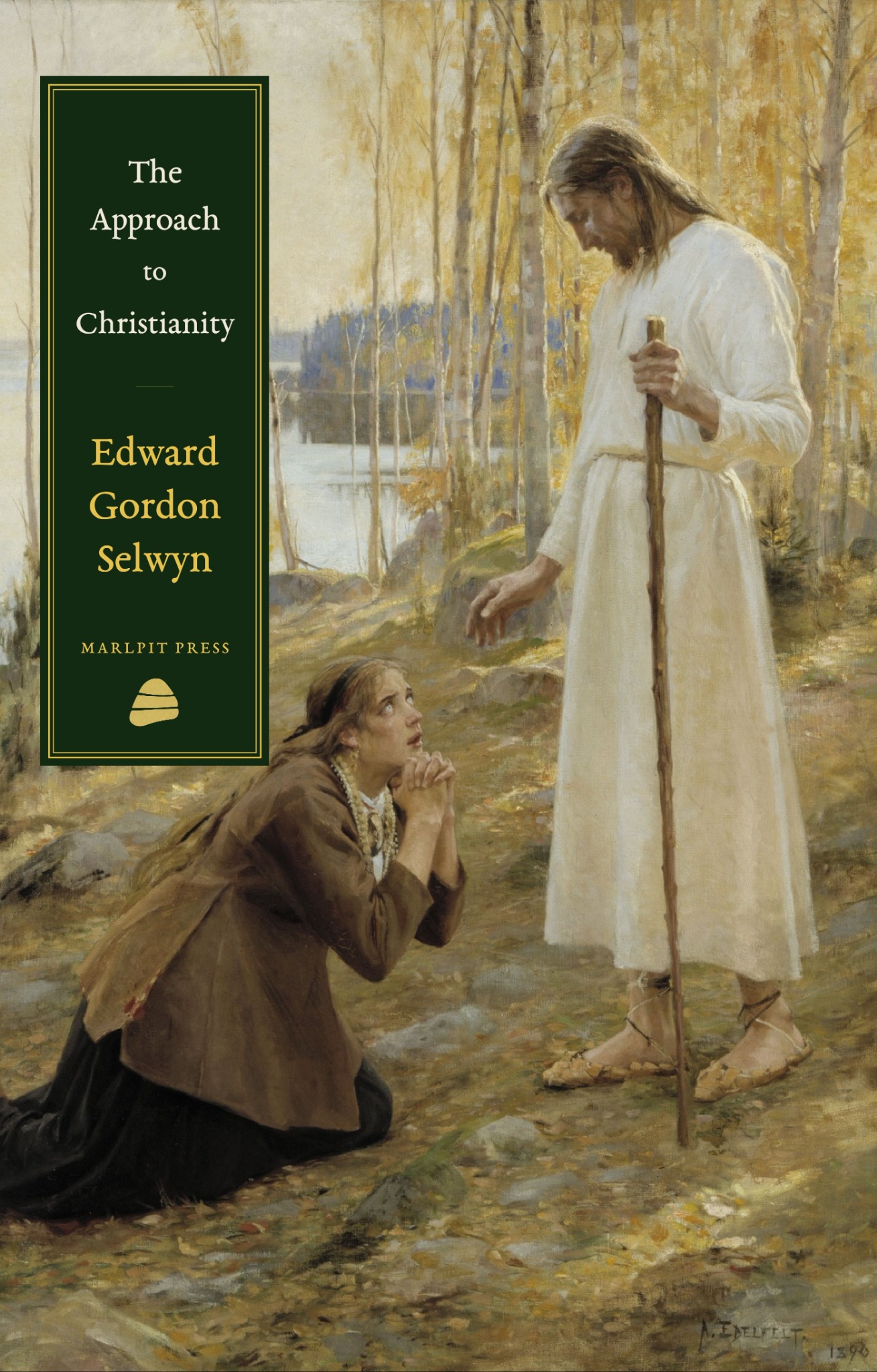
The Approach to Christianity was published in 1925 as a defense and exposition of Christianity from an Anglican Catholic standpoint in conscious engagement with modern criticism and psychology.
Selwyn refuses two easy exits. He does not protect Christianity by ignoring historical criticism, and he does not preserve intellectual respectability by reducing Christianity to ethics or religious feeling. The governing problem of the book is whether critical scholarship and supernatural faith can inhabit the same intellectual world.
The reality and autonomy of the supernatural
Selwyn announces his central concern in striking terms: Christianity must vindicate the reality and autonomy of the supernatural.
The First World War had damaged Edwardian confidence in inevitable progress and exposed the moral neutrality of scientific power. For Selwyn, that collapse made it harder to treat science or social progress as a substitute for religion. The supernatural could no longer be dismissed simply as a primitive remainder waiting to disappear.
Friedrich von Hügel and religious experience
Baron Friedrich von Hügel is one of the book’s most important intellectual guides. Selwyn treats religious experience as evidence that must be interpreted rather than either absolutized or explained away.
This places him in a recognizably early twentieth-century conversation with psychology of religion, William James, Rudolf Otto, and modern attempts to describe the experiential structure of faith while still asking whether religious experience points beyond itself.
Historical criticism without theological surrender
Selwyn writes after decades of disruptive biblical criticism. His index ranges across Wellhausen, Harnack, Wrede, Schweitzer, Kirsopp Lake, Streeter, Burkitt, and other scholars associated with the historical study of Scripture and Christian origins.
He accepts the legitimacy of critical and historical methods while resisting the assumption that criticism must end in naturalism. The argument therefore turns repeatedly on the difference between revising a historical formulation and abandoning the supernatural substance of Christianity.
The Christ of History and the Christ of Faith
A contemporary review singled out Selwyn’s treatment of the “Christ of History” for special attention. Selwyn takes the historical Jesus seriously without trying to separate him permanently from the Christ confessed by the Church.
His method is synthetic. Historical fragments, the Passion narratives, the Synoptic tradition, and the Church’s developed confession have to be interpreted together rather than assigned to mutually exclusive worlds of history and faith.
Resurrection and Ascension
The Resurrection is a decisive test of Selwyn’s whole project because it cannot be retained merely as a moral symbol if Christianity is genuinely supernatural.
He therefore approaches Easter as a historical and theological claim, taking critical questions about the Gospel traditions seriously while defending the objective reality of the risen Christ. The Ascension belongs to the same larger effort to articulate supernatural faith without withdrawing from historical inquiry.
Incarnation, Atonement, sin, and Christian character
Selwyn’s argument moves beyond apologetic preliminaries into the central doctrines of Christianity. The Incarnation, the Atonement, sin, punishment, moral freedom, and Christian character are treated as parts of one account of human beings before God.
The book’s breadth matters. Selwyn is not offering a single argument for God or a narrow defense of miracle. He is testing whether an intellectually responsible Christian worldview can connect experience, history, doctrine, worship, ethics, and the person of Christ.
Catholic and critical Anglicanism
Selwyn’s churchmanship is best placed in the liberal Anglo-Catholic or Liberal Catholic stream of Anglican theology. He wanted Catholic continuity, sacramental religion, historic doctrine, and the corporate life of the Church while remaining open to modern scholarship.
That combination became even more visible the following year when he edited Essays Catholic and Critical, an influential Anglican collection that deliberately paired Catholic theology with critical scholarship.
The Church, Anglicanism, and Christian unity
The later movement of the book leads toward the Church and the distinctive character of Anglican theology. Selwyn’s index ranges through the Oxford Movement, Roman Catholicism, papal infallibility, Anglican divines, the Book of Common Prayer, the Eastern Church, reunion, and sacramental questions.
For him, Christianity is not simply an individual philosophy of religion. It has a historical and institutional form, and any adequate modern theology has to explain how personal religious experience relates to creed, worship, ministry, and the life of the Church.
How the book was received in 1926
The book was reviewed in several theological venues almost immediately. J. M. Creed reviewed it in the Journal of Theological Studies in April 1926. The Churchman discussed it under the heading “Anglo-Catholic Philosophy,” identifying Selwyn with the Anglo-Catholic movement.
The London Quarterly Review emphasized von Hügel’s influence, Selwyn’s postwar argument for the supernatural, and the chapter on the Christ of History. Longmans marketed the book as a Christian defense written from a Catholic standpoint in the light of modern criticism and psychology.
About Edward Gordon Selwyn
Edward Gordon Selwyn (1885–1959) was an English Anglican priest, classical scholar, theologian, and editor. After an academically distinguished Cambridge career, he served as Warden of Radley College and Rector of Red Hill near Havant.
From 1920 he edited Theology, a journal closely associated with liberal Catholic Anglican thought. In 1931 he became Dean of Winchester, an office he held until 1958. His later scholarship included major work on the First Epistle of St. Peter, while his editorial work helped shape interwar Anglican theology.
Why the book still matters
The intellectual configuration Selwyn addresses remains familiar: readers who accept modern historical scholarship but resist the assumption that critical method settles metaphysical questions in advance.
That makes The Approach to Christianity especially relevant to readers interested in supernatural Christianity, Anglican theology, historical criticism, religious experience, Resurrection studies, and the attempt to combine doctrinal seriousness with intellectual freedom.
Anglican theology
Edward Gordon Selwyn and Liberal Anglo-Catholicism
How Selwyn joined Catholic doctrine, sacramental Anglicanism, historical criticism, and intellectual freedom in the interwar Church of England.
Read research noteFaith & criticism
Supernatural Christianity and Historical Criticism
The central problem of The Approach to Christianity: whether modern criticism and psychology can be accepted without reducing Christianity to naturalism.
Read research noteResurrection
Selwyn on the Resurrection and Historical Criticism
Why the Resurrection became a decisive test of Selwyn’s attempt to defend objective supernatural faith while taking modern biblical criticism seriously.
Read research noteReligious experience
Selwyn, Friedrich von Hügel, and Religious Experience
How von Hügel helped shape Selwyn’s treatment of religious experience, psychology, tradition, and the supernatural.
Read research noteReception
How The Approach to Christianity Was Received in 1926
A guide to the early review trail in The Journal of Theological Studies, The Churchman, and the London Quarterly Review.
Read research note MARLPIT PRESSIndependent Publisher